

Public discussion in the United Kingdom continues to treat immigration as a policy debate subject to electoral correction. Targets are announced, governments change, and each political cycle is framed as an opportunity for adjustment. The underlying assumption is that outcomes reflect shifting political preference.
The observable pattern suggests something different.
The structural character of the trajectory was examined in UK Immigration: Policy Failure or System Direction?. That analysis reviewed more than two decades of policy outcomes and found sustained high inflow across governments, across parties, and despite repeated official warnings regarding integration capacity, housing pressure, service strain, and social cohesion. The key finding was not the scale of immigration but its persistence under political change. The Cantle Report, the Casey Review, parliamentary committees, and audit bodies all identified limits to integration capacity and warned that prolonged high inflow would increase fragmentation and administrative strain. The trajectory continued.
Under Strategic Intent Analysis (SIA), persistence across political cycles and institutional warning is decisive. When a policy continues despite negative feedback and available corrective authority, the outcome reflects system direction rather than policy drift.
Brexit provided a direct structural test. External constraint was removed. Legislative authority over migration returned fully to Westminster. If prior outcomes had been externally imposed, a structural reduction should have followed.
Instead, net migration reached record levels.
At that point, the only coherent interpretation is that the demographic transformation was operationally deliberate.
Once direction is established, the analytical question changes. The issue is no longer whether the trajectory will reverse, but how the governing system adapts to the conditions that trajectory is expected to produce.
Those conditions were not uncertain. Official reporting repeatedly identified geographic concentration, parallel social structures, uneven labour-market integration, language isolation, pressure on housing, and increasing strain on local services. These effects were foreseeable and documented in advance. When a system maintains a trajectory beyond its own identified integration capacity, the resulting fragmentation cannot be treated as unintended. The operating assumption was continuity.
This pattern is not unique to the United Kingdom. Across Western Europe, comparable trajectories have persisted through changes of government and political orientation. Germany, France, Sweden, Belgium, the Netherlands, and Italy have all experienced sustained high inflow over extended periods, accompanied by official warnings regarding integration capacity, fiscal pressure, housing shortages, labour-market exclusion, and the growth of parallel social environments. Government audit bodies, economic advisory councils, and parliamentary reviews in multiple countries have identified similar structural risks. The direction did not materially change.
The convergence is analytically significant. Independent policy failure across multiple sovereign states would be expected to produce variation as governments adjust course. Instead, the broad trajectory has remained aligned despite different electorates, party systems, and institutional structures. Under SIA, lockstep persistence across independent systems indicates shared structural incentives operating above the level of national political turnover. The effective decision space of individual governments has narrowed, even where public concern has grown.
The institutional response within the United Kingdom reflects the assumption that the resulting environment will persist.
Domestic surveillance capacity has expanded steadily through successive legislative frameworks. Communications data retention widened. Lawful interception capabilities increased. Cross-agency data sharing became routine across policing, intelligence, safeguarding, and administrative enforcement. Automated facial recognition trials expanded, and large-scale camera integration deepened across public space. Identity verification, digital monitoring, and behavioural data collection became embedded features of administrative governance. These developments represent long-term infrastructure investment rather than temporary emergency measures.
Systems do not build permanent monitoring architecture in anticipation of temporary conditions. Enduring surveillance capacity indicates an expectation that detailed population awareness will be required as a normal operating requirement.
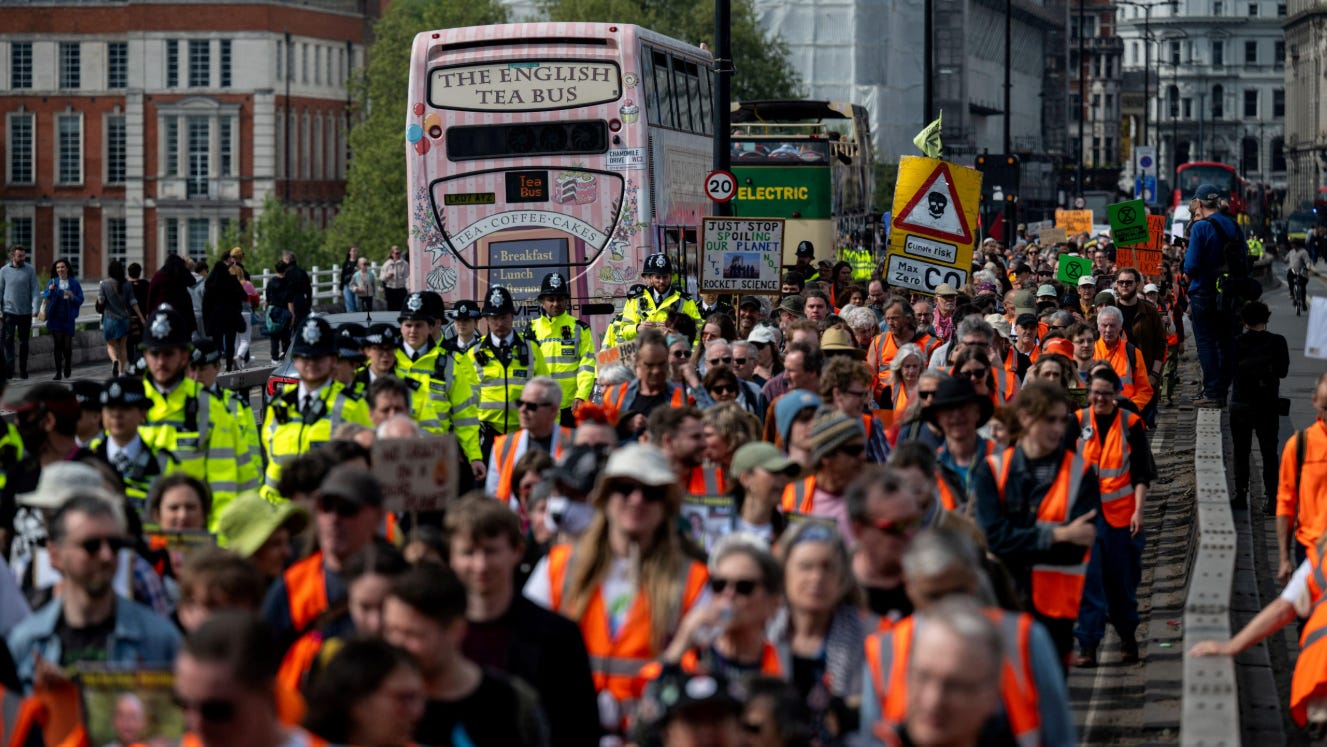
At the same time, regulatory authority over expression expanded. The Online Safety framework established ongoing oversight of lawful content based on perceived risk of harm rather than criminal threshold. Legislative changes lowered the disruption standard required to restrict protest activity. Policing practice increasingly emphasises early intervention, record creation, and administrative resolution rather than prosecution.
This operational environment reflects the constitutional structure examined in Britain Has Never Had Freedom of Expression: Parliamentary Sovereignty and the Permission Model. That analysis demonstrated that expression in the United Kingdom has never been placed beyond legislative reach. Under parliamentary sovereignty, speech exists by statutory tolerance rather than constitutional protection. Intervention does not require conviction. Investigation, warning, data recording, and procedural burden function as compliance mechanisms. The operational effect is behavioural restraint produced by uncertainty and administrative cost.
Surveillance expansion and permission-based expression operate together. Monitoring increases system awareness of emerging tension. Legal flexibility allows rapid adjustment of permissible conduct. Administrative processes impose consequence without judicial threshold. Large-scale enforcement is rarely necessary. Behaviour stabilises through observation and uncertainty.
The Pre-Event Knowledge and Planning (PEKP) framework provides a further indicator of system expectation. PEKP identifies institutional preparation that assumes a future operating condition rather than merely acknowledging it as a possibility. In the United Kingdom, national risk frameworks now treat large-scale public disorder as a reasonable operational scenario. Inspection regimes evaluate readiness against that assumption. Public-order doctrine, information-control authority, and assembly restrictions have been embedded in permanent legislation rather than emergency provisions.
These measures reflect institutional expectation of sustained internal friction.
Public language has moved in parallel. Officials, academics, and security commentators increasingly describe polarization, parallel communities, cohesion risk, and the possibility of internal conflict. Repetition narrows the range of expected futures. Measures that expand monitoring or restrict disruptive activity appear preventative rather than exceptional. Under SIA, public narrative aligns with the operating assumptions already embedded in institutional planning.
Viewed together, the pattern is coherent. A long-term demographic trajectory was sustained across decades despite formal warnings. Comparable trajectories persisted across multiple Western European states. Economic and administrative systems reorganised around continuation. Surveillance capacity expanded to provide population-level awareness. Expression remained legally adjustable under parliamentary authority. Public-order planning assumed recurring disruption as a baseline condition.
The direction did not change.
The capacity required to manage its foreseeable consequences expanded.
The social environment now emerging is not the result of policy failure. It is the product of a trajectory the system chose to maintain.
When a governing structure sustains a policy for decades despite explicit warnings about its social effects, and simultaneously builds the monitoring and control architecture required to manage those effects, the resulting conditions are not accidental.
They are operationally anticipated.
The United Kingdom has not drifted into a higher-friction environment.
It has been prepared to operate within one.