

For most of modern history, reincarnation has been filed under religion. That classification has allowed the evidence to be treated as belief before it is examined as evidence.
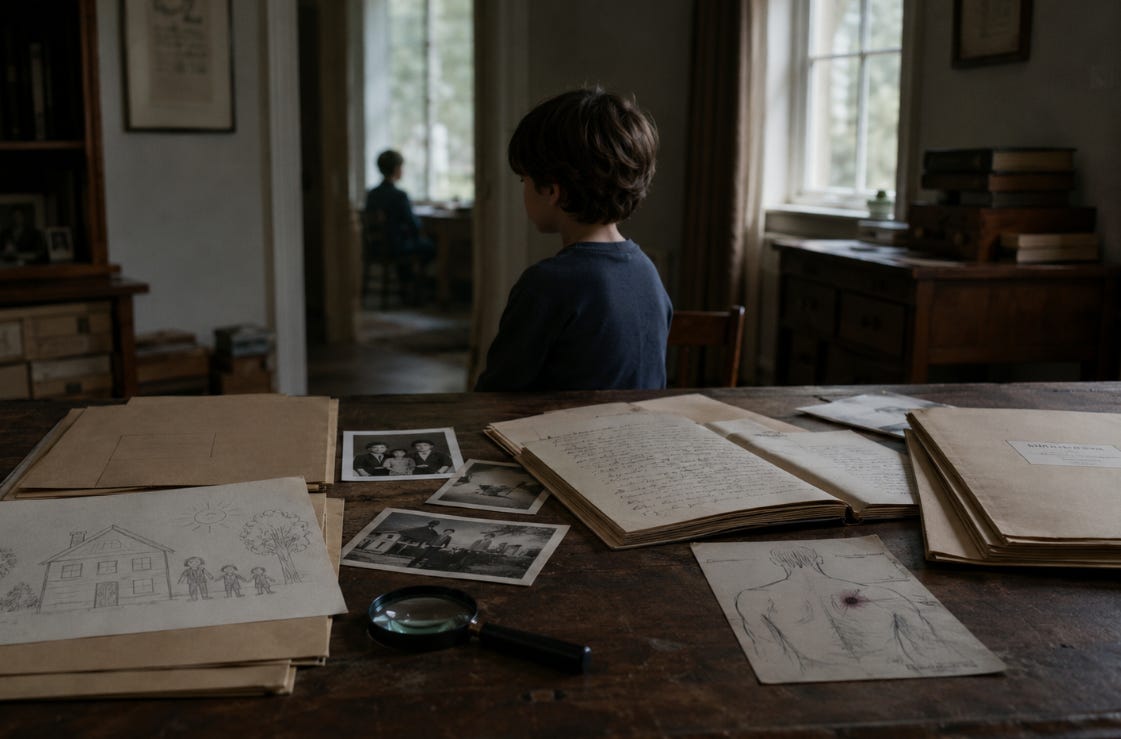
The proper starting point is the case file. A young child speaks about another family, another home, a former occupation, or a violent death. Names and places are identified. The child recognizes people who are strangers in the present life and responds to them with the familiarity, affection, resentment, or grief expected from the deceased person. Unusual fears, preferences, habits, or abilities accompany the memories. In some cases, the child is born with a mark or deformity corresponding to an injury on the body of the person remembered.
Ian Stevenson established the modern evidentiary foundation at the University of Virginia. Over several decades, Stevenson and his successors collected more than 2,500 reported cases. The children usually began speaking between the ages of two and five. Their statements frequently identified one particular deceased person, while their behaviors, relationships, phobias, and death memories pointed to the same life. The memories commonly faded around the age of seven, although the associated dispositions sometimes remained. The University of Virginia Division of Perceptual Studies continues this work.
The physical evidence is harder to dismiss. Stevenson’s two-volume Reincarnation and Biology gathered the full corpus of his birthmark and birth-defect cases. Many involved marks or congenital anomalies corresponding in location and appearance to wounds, often fatal wounds, sustained by the person whose life the child remembered. Others matched scars, tattoos, missing digits, surgical marks, or marks deliberately placed on a corpse. The University of Virginia database reports that roughly thirty percent of its cases contain a birthmark and/or birth defect.
A birthmark by itself proves little. A child’s statement by itself may be mistaken. A family can misremember, cultural expectation can shape interpretation, and information can travel through ordinary channels. The force lies in convergence. In the strongest cases, detailed statements, recognition of former relatives, characteristic behavior, fear connected to the remembered death, and physical correspondence all identify the same deceased person. One ordinary explanation must account for the entire cluster.
The strongest ordinary objections are not trivial. Some reports may involve cryptomnesia, family transmission, cultural priming, fraud, faulty memory, or selective preservation of unusually strong cases. Those explanations must remain available when individual reports are weak. They do not account for the strongest clusters. Cultural expectation may affect which cases are reported, but it does not explain why statement, behavior, recognition, death memory, and bodily correspondence repeatedly converge upon one identifiable deceased person.
Once those objections are tested against the strongest clusters rather than against isolated anecdotes, the cumulative evidence becomes overwhelming. Reincarnation occurs. A person can survive bodily death, retain an organized identity, and become associated with another body.
That establishes the phenomenon. It does not explain its purpose.
The familiar explanation describes earthly life as a school. People return to learn lessons, correct mistakes, and accumulate wisdom. The metaphor fails when memory is considered. A school that burns the notebook after every term cannot expect an orderly education. Each pupil must rediscover what was previously learned without knowing what was attempted, understood, or failed.
What crosses most visibly is often unfinished experience rather than completed wisdom. Children retain terror associated with gunfire, drowning, falling, or violent assault. They grieve for former relatives. They demand to return to an earlier home. They carry anger toward a killer or habits acquired in another occupation. The strongest continuity often follows abrupt death.
This looks less like a curriculum than the persistence of a person whose life ended before its structure was integrated. Learning still occurs, but information may not be the lasting product. The lasting product is the person formed through experience and choice.
Consciousness as Presence in a Structured World argued that living beings do not manufacture consciousness. They allow consciousness to appear through them. A living organism provides a local structure in which truth can be registered, time remains continuous, consequences matter, and a unified field of experience can form.
Reincarnation adds personal continuity to that model. If memories, fears, relationships, preferences, and elements of character survive the destruction of one brain and appear through another, the brain cannot be their sole source. It functions more coherently as receiver, localizer, and biological interface.
The receiver model does not reduce individual people to temporary windows opened by an impersonal field. The cases preserve organized identity. A child does not usually produce fragments from many unrelated lives. Memory, emotion, relationship, behavior, and physical injury arrive together from one person. Consciousness survives in individual form.
This suggests a reciprocal process. Foundational consciousness comes from the Creator, but the individual person develops through embodiment. The body limits consciousness to one position, one history, and one field of action. It creates vulnerability and consequence. Within those conditions, truth can be accepted or denied, another person can be protected or harmed, and responsibility cannot remain theoretical.
The body shapes consciousness, and the surviving consciousness may also shape the body. Stevenson’s physical cases suggest that something carried from the previous person can influence a developing organism. The body is more than a radio receiving an untouched signal. Embodiment is an exchange between biological form and an already organized consciousness.
The soul, under this model, is the enduring individual formed through that exchange. It is not a finished object sent repeatedly into different bodies. Each life contributes to its organization. Death removes the biological interface while leaving the person intact.
Reports of the interval between lives support this distinction. Poonam Sharma and Jim Tucker examined thirty-five Burmese children who remembered events between death and rebirth. Their accounts contained three recurring stages: an initial transition after death, a more stable period in a particular location, and a return stage involving parents or conception. The children reporting intermission memories also tended to provide more verified information about their previous lives. The sample is limited and culturally concentrated, but its internal pattern is important.
The reincarnating person can therefore remain organized without a body. Graduation cannot mean becoming immortal for the first time. Survival has already occurred. The real threshold is freedom from compulsory return.
The cases suggest that return operates through resonance. A person killed abruptly may remain organized around the manner of death, the people left behind, the place where it happened, or work that remained unfinished. Those attachments create affinity with material conditions in which the pattern can continue. Violent deaths are overrepresented in the strongest childhood cases and are associated with vivid memories, phobias, physical correspondences, and shorter intervals.
Choice can still operate within that process. Intermission accounts include the selection of parents, movement toward a particular mother, and awareness of conception. The degree of freedom may vary. One person may be pulled rapidly toward familiar relationships. Another may choose among several possible conditions. A more integrated consciousness may select a family, lineage, place, and historical period because they support a particular function.
The timing evidence fits association rather than biological manufacture. Later reviews of very short intermission cases have identified examples in which the interval between the previous person’s death and the child’s birth was shorter than ordinary gestation. Such cases suggest that consciousness may associate with an already developing body rather than being biologically produced from conception. If consciousness can associate with a body already far advanced in gestation and still influence its expression, the body is better understood as a compatible receiver than as the manufacturer of the person.
Memory has not been erased, because some children retain it. Access changes.
During early childhood, the new autobiographical identity has not fully consolidated. The former life may remain close enough to enter ordinary speech. As the child becomes rooted in the present body, language, family, and surroundings, the new interface takes command. Around the age of seven, the earlier biography usually dims.
Some restriction may be unavoidable. Several complete lives competing for ordinary attention would make stable participation in the present one difficult. The new identity needs a dominant field of memory in which current relationships and responsibilities can become real. The former biography recedes while the structure formed through it remains. Character, aptitude, fear, attachment, and moral orientation survive more readily than names and dates because they have become part of the person.
The cost is obvious. A child may carry terror without knowing its source. An attachment can persist after the relationship has disappeared from conscious memory. Ability may return without recollection of the work that produced it. A person can spend years responding to a wound whose history is hidden.
That is a poor design for a school. It makes sense as a process of formation. The enduring result is not a stored curriculum. It is an increasingly stable capacity for perception, responsibility, restraint, relationship, and action. What matters is what consciousness has become.
Natural law can govern this process without a spiritual bureaucracy. Consciousness organized around fear, appetite, grievance, domination, or unfinished attachment remains resonant with material conditions in which those patterns can continue. Integration weakens the pull. Return follows correspondence between the person’s internal structure and the conditions another life provides.
Graduation occurs when embodiment ceases to be necessary. No judge or religious office confers it. The person can retain identity without material constraint, recover the history carried across lives, absorb consequence without denial or collapse, and encounter wider consciousness without losing individuality. Fear, guilt, appetite, and trauma no longer pull the person involuntarily toward another body.
Return can then become voluntary. Embodiment may serve relationship, creation, protection, or correction. The person enters material conditions because a function requires presence there.
Reincarnation carries a direct consequence for earthly power. A government, institution, or individual can destroy the body, end present relationships, interrupt unfinished work, and inflict lasting grief upon those who remain. It can terminate an embodiment. The evidence does not show that it can terminate the person expressed through it.
Fear makes that limited power appear absolute. Many people are taught either that death is extinction or that it is a one-way passage into external judgment. In traditions that teach one earthly life followed by irreversible judgment, doctrine, sacrament, authorized belief, and clerical interpretation are placed around that judgment. Where eternal punishment is taught, the person who doubts the institution is made to risk not merely social exclusion but infinite punishment.
Reincarnation removes that jurisdiction. Consciousness survives without institutional permission and returns through a lawful process no church, state, or priesthood created. Natural consequence remains, but eternal sentencing by an external authority does not describe the observed structure. Human power can inflict death. It cannot make death final.
This does not make bodily death trivial. A life contains irreplaceable relationships, opportunities, responsibilities, and work. Violent death tears through all of them. The correction is narrower and more exact: death is a real injury, but it is not the extinction of consciousness. Temporal power possesses the ability to end an embodiment, not the authority to own the being who survives it.
The transition may remain vulnerable to interference. Fear strengthens attachment. Guilt can be used to manufacture obligation. Claimed authority can present return as the only available path. If parasitic intelligence operates within the transitional field, it may influence attention, interpretation, timing, or consent.
The reincarnation evidence does not show that such intelligence controls the system. It did not create consciousness or natural law. Its leverage would depend upon confusion and unresolved attachment. Interference at the boundary does not amount to ownership of the process. Reincarnation requires no prison architecture to explain it.
This model supplies a missing dimension to Lineage as Control and Correction. That essay described lineage as a structure through which property, memory, access, duty, secrecy, trauma, vocation, and unfinished work move across generations. Inverted lineage turns inheritance into private advantage. Restorative lineage receives continuity as responsibility and repair.
Biological descent alone cannot explain why one member of a family embodies an inherited function while another does not. Reincarnation completes the relationship. The lineage supplies a biological, historical, and relational structure. The arriving consciousness brings prior orientation, capacities, attachments, and degree of development.
No one incarnates into an abstract body. Every body belongs to a family, place, culture, and history. A lineage carries characteristic abilities, vulnerabilities, symbols, obligations, and social positions. It creates the material setting in which a recurring function can appear.
The warrior, healer, builder, recorder, investigator, teacher, protector, and priestly guardian are more than occupations. They are durable forms of responsibility. A consciousness repeatedly formed around one of them may resonate with a lineage capable of supporting it.
George S. Patton provides an illustration, not evidence in the Stevenson sense. His account is self-authored and belongs in a different evidentiary register. Its value is that it shows how a recurring function may understand itself and enter a lineage already saturated with compatible work.
In 1922, long before his most consequential command, Patton wrote Through a Glass, Darkly. He described himself as a fighter across many historical periods, imperfectly remembering different weapons, armies, and deaths while recognizing the same identity beneath them: “many names, but always me.”
Patton entered a family saturated with military continuity. His grandfather was a colonel killed during the Civil War. His great-uncle died at Gettysburg. His son later became a major general. Patton experienced lineage as role, memory, burden, and command.
The warrior function carried no automatic moral alignment. Patton wrote that he had played both hero and knave. A warrior can protect or conquer. An investigator can expose deception or perfect surveillance. A builder can create a settlement or a prison. A recorder can preserve history or manufacture it. Reincarnation can preserve capacity while moral formation remains unfinished.
The Priestly Schism and the DNA of the Cohanim provides a different example of continuity. The Dead Sea Scrolls preserve a fracture within the ancient priesthood over law, legitimacy, calendar, sacred order, and corrupted office. Modern Y-chromosome research identifies several ancient Cohen branches rather than one uniform priestly line. Dominant branches remained concentrated within Jewish populations. Older, rarer branches became more dispersed.
The two records do not establish a named chain of descent from an ancient dissident priest to a modern man. They reveal the same structure from different directions. A documented fracture in priestly authority is accompanied by divergent patterns of lineage survival. Some branches remained inside the institutional center and retained recognition. Others appear to have separated, assimilated, or lost institutional identity while continuing biologically.
Reincarnation offers another carrier of the unresolved function. A priestly lineage can preserve biological descent, historical memory, symbolic form, and the trace of an older dispute. A consciousness oriented toward discernment, blessing, boundary, lawful order, and protection of the relationship with the Creator may find that lineage fitted to its work.
The lineage does not manufacture the orientation or confer spiritual authority. It supplies the ground upon which the function can reappear.
Priestly function is unusually vulnerable to capture because it stands near the relationship between consciousness and the Creator. In lawful form, it guards distinction, preserves memory, teaches law, and protects sacred relationship from corruption. In inverted form, it claims ownership of the relationship.
Organized Religion and the Capture of Prayer documented that reversal. Prayer begins as direct communication with the source of lawful order. Organized religion places doctrine around it, clergy above the person, ritual between intention and expression, and authorized interpretation between prayer and any answer that follows. Direct access becomes managed access. The institution claims jurisdiction over what the Creator can say and what the person may do in response.
The language, office, ritual, and appearance of sacred custody remain. The direction of service has reversed. Instead of protecting direct relationship, the institution intercepts it. Instead of guarding law against corrupted authority, it gives authority sacred protection.
A returning priestly function need not inherit an intact office. Consciousness may enter a compatible lineage, encounter the fracture carried within it, and recover the work outside the institution that captured its form. Lineage here is embodied infrastructure, not rank. Its value lies in what it can support.
A lawful lineage is a trust. Reincarnation helps explain why someone may arrive prepared to receive that trust as work rather than possession.
The connection becomes more consequential during the turning of an age. The Turning of the Age described age-time as corrective. The annual cycle permits life to unfold through growth, decline, rest, and renewal. The deeper age-cycle places accumulated civilizational structure under review. Institutions may retain their offices, ceremonies, credentials, and authority long after their purpose has failed. At the turning, accumulated misalignment meets conditions it can no longer control.
An age transition does not automatically produce better conditions. The outgoing order tries to cross the boundary. It carries wealth, institutional memory, command systems, protected authority, technology, and narrative control into whatever comes next. An inverted order seeks continuity for its inversion.
Correction needs continuity too. It cannot wait until the threshold has already been crossed. Consciousnesses capable of performing necessary functions must enter beforehand. They require suitable lineages, language, practical experience, and knowledge of the institutions they will eventually examine or repair. Preparation may consume most of a lifetime before the function becomes clear.
No explicit memory of an agreement is required. Purpose may survive as orientation. Certain questions refuse to go away. Protected contradictions remain intolerable. Skills acquired in separate parts of life begin serving the same work. The person experiences the function as recognition rather than invention. The decision is forgotten, but its direction remains.
Correction would require many people because no one person or lineage can carry it. Different consciousnesses enter different conditions. One recovers the protective warrior. Another restores healing to natural order. Another preserves truthful history. Another exposes institutional inversion. Another restores direct relationship with the Creator. They need not know one another. Their work converges because each is responding to the same underlying disorder.
The turning is therefore a conflict over the alignment of recurring human functions. Warriors, priests, builders, investigators, healers, and recorders will pass into the next age. The unresolved question is whom and what they will serve.
Reincarnation permits unfinished patterns to continue, but it also allows developed consciousness to return deliberately. Lineage supplies the embodied instrument. Historical conditions supply the field of action. Natural law distinguishes lawful function from its captured form.
The Creator and the Structural Preference for Good explains why correction is possible without being guaranteed. Good generates the trust, truthful relationship, cooperation, abundance, and living order upon which durable structure depends. Evil captures and consumes those goods. It cannot create the conditions required for its own survival.
Inverted institutions can nevertheless endure for generations. Lying, extraction, intimidation, and centralization produce immediate advantages. Each advantage carries a cost. One lie requires altered records, discredited witnesses, restricted questions, and further lies. Extraction must locate new resources and new generations to consume. Surveillance replaces trust. Coercion expands as legitimacy declines. Increasing energy is spent preserving the contradiction.
Cycles change the conditions upon which accumulated power depends. A turning can weaken structures adapted to the departing age and expose contradictions previously protected by wealth and authority. Inversion can prepare for that transition and try to carry itself forward. The structural preference for good supplies correction with an advantage, not a guaranteed victory.
Reincarnation belongs within that correction mechanism because natural law preserves freedom. The Creator does not restore order by abolishing meaningful agency. Consciousness can depart from alignment, experience consequence, form identity, return, and eventually choose service. A developed consciousness can enter material conditions without being compelled by them and participate in correction without adopting the methods of inversion.
The formation of the soul and the correction of an age are the same process operating at different scales. The individual learns to retain identity, integrate consequence, and act without compulsion. The wider order must recover human functions from institutional capture. Both movements replace imposed control with coherent alignment.
We return because an enduring person has formed but remains incomplete. Attachment, trauma, relationship, responsibility, and purpose continue after one body fails. Material conditions allow consciousness to become capable of truthful and responsible agency. Sometimes a function required by the wider order can only be performed through embodied presence.
Graduation does not end relationship with the material world. It ends compulsory dependence upon it. An integrated consciousness can remain beyond embodiment or enter it freely. When return becomes a choice, reincarnation ceases to be repetition. It becomes service.
The turning of the age places that service within a larger structure. What enters the next age will be determined partly by the consciousnesses that return, the lineages through which they act, and the alignment of the functions they carry. The outgoing inversion is attempting to reproduce itself. Correction is already present wherever consciousness, lineage, and natural law converge to restore the function beneath the captured form.
Source note: Factual claims concerning the University of Virginia database, age range, memory fading, birthmarks and birth defects, and the two-volume Stevenson work were checked against the University of Virginia Division of Perceptual Studies. The intermission-memory discussion was checked against Sharma and Tucker’s study of thirty-five Burmese cases. The short-intermission discussion was stated cautiously because the precise Matlock figures should be verified against the original review before being made load-bearing.