

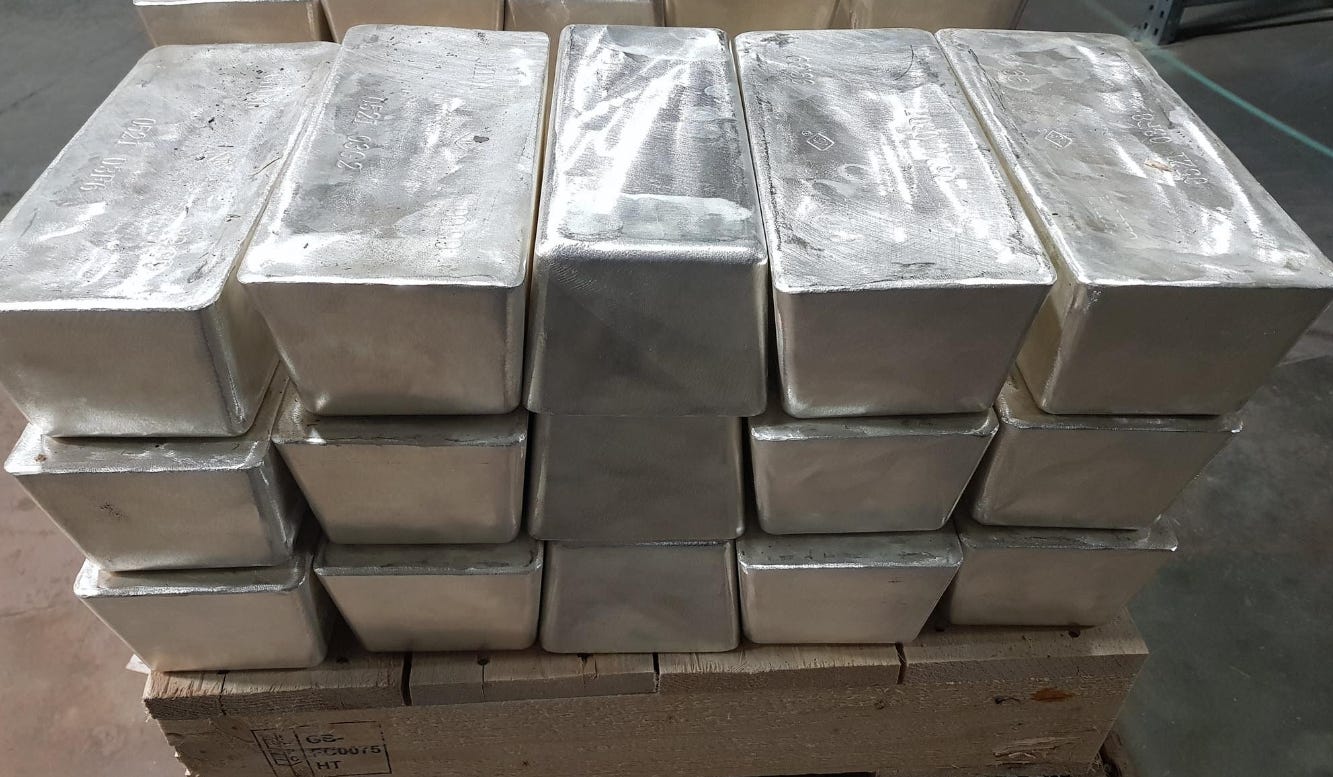
Silver occupies an unusual position in the modern financial order. It is no longer treated as money in the formal sense. States do not settle major balances in silver. Central banks do not hold it as a primary reserve asset. Most commentary places it in a secondary category somewhere between industrial metal, speculative vehicle, and inflation hedge. Yet that classification is incomplete. Silver retains a residual monetary character, but in the modern system that character appears mostly as a shadow: less visible in ordinary conditions and more visible when confidence in financial assets begins to weaken.
That shadow matters because modern monetary systems rest on layered confidence. Bank deposits, sovereign bonds, equities, pension promises, and derivative structures all depend on a broader belief that the financial architecture will remain liquid, credible, and politically manageable. As long as that belief holds, silver can be treated as marginal. It can be discussed mainly in relation to manufacturing demand, solar panels, electronics, mine output, or retail speculation. But when confidence in financial claims begins to weaken, the classification starts to change. Silver is no longer judged only by what it does in industry. It begins to be judged by what kind of asset it is when paper wealth feels less secure.
Gold usually moves first. As argued in Gold Without Counterparty Risk, that is because gold is the clearest monetary asset outside the credit system. It does not depend on an issuer’s solvency, a bank’s stability, or a government’s ability to preserve confidence in its liabilities. For that reason, gold tends to respond earliest when trust begins to shift away from financial claims and toward assets valued precisely because they stand outside institutional promise. Silver becomes important later, once that initial monetary repricing starts to widen.
That first move helps explain why silver matters. Silver is not simply following gold as a smaller metal with more volatility. It is beginning to re-enter view as a subordinate monetary asset whose relevance had been suppressed rather than erased. The modern system prefers assets whose meaning can be managed administratively. Financial assets can be repriced, collateralized, leveraged, guaranteed, purchased, and backstopped. Their weakness can be deferred through intervention. That is one reason tangible monetary assets become more visible precisely when managed confidence begins to fail. Silver is different. It has no issuer, no policy committee, no cash-flow story, and no earnings narrative. In calm periods that makes it look inferior. In unstable periods that same difference begins to look like strength.
Its physical nature helps explain this without needing to carry the whole argument. Silver is tangible, scarce, divisible, recognizable, and historically legible across long periods of time. It is not a promise about future performance. It is a material asset whose properties do not depend on the confidence structure built around it. That does not make it formal money in the modern system. It does help explain why silver repeatedly returns to monetary relevance when confidence in abstraction begins to weaken.
A different point follows from Gold and the Emerging Monetary Order. Gold is not simply a private hedge or historical relic. It continues to occupy a serious place in sovereign reserve logic, even when official monetary rhetoric remains focused on currencies, bond markets, and managed liquidity. Silver does not sit in that reserve tier. That lower status does not erase its monetary significance. It delays recognition until stress spreads beyond the reserve core. If gold shows that the official system never fully abandoned tangible monetary anchors, silver shows that monetary memory extends beyond that upper tier and can reappear more broadly when confidence deteriorates.
History supports that distinction. In the inflationary and monetary turmoil of the 1970s, gold reasserted its monetary role first and most clearly. Silver followed later and with much greater speculative intensity, not because it had become a new industrial miracle, but because the wider public was also searching for refuge from currency instability and monetary disorder. The same general pattern appeared in March 2020. Gold was more immediately legible as the primary monetary hedge, while silver initially behaved more like a risk asset in the liquidation phase. But once the crisis response expanded into massive monetary intervention and broader distrust of financial claims, silver recovered sharply and began to trade less like an ordinary industrial metal and more like a secondary monetary asset. In both cases, gold led and silver’s monetary shadow became clearer as the trust environment deteriorated.
That pattern can be missed because silver sits on the boundary between industrial and monetary logic. In normal conditions, the industrial description appears sufficient. Silver does have substantial industrial demand, and its price behavior is noisier than gold’s. It can underperform for long stretches, especially when monetary stress is low or when financial markets still believe policy can contain disorder. But under broader uncertainty, those features stop defining it fully. A metal with one foot in industry and one in monetary history can reprice sharply when markets begin to reconsider what counts as safety, liquidity, and real value.
This also explains why silver often lags before it accelerates. Gold can move first because it is the cleaner monetary signal. Institutions, reserve managers, and large capital pools understand its function more readily. Silver usually becomes more important at a later stage, when distrust broadens beyond elite hedging and into wider doubt about paper wealth. At that point, silver becomes legible to a larger set of actors not only as a commodity with upside, but as a more accessible form of monetary protection. The metal itself has not changed. What has changed is the hierarchy of trust around it.
None of this means silver becomes a stable monetary anchor in the way gold historically has. Its market is smaller, its volatility is greater, and its industrial role creates noise that gold does not face to the same degree. The point is narrower and stronger. Silver becomes more than a commodity without becoming fully equivalent to gold. That intermediate position is exactly what makes it important. It reveals that the monetary order is less settled than it appears.
A system fully confident in its own credibility does not produce recurring interest in subordinate monetary metals. It may tolerate them as curiosities or speculative instruments, but it does not need them. When silver starts to matter differently, that is usually a sign that the credibility of financial assets is no longer being taken for granted. Trust is not gone, but it is weakening at the margins. Because modern systems are built on layered confidence rather than tangible settlement, marginal changes in trust can matter greatly. Silver’s re-emergence is not the cause of that change. It is one of the clearer signs that the hierarchy of belief inside the asset system is beginning to move.
That is why silver remains analytically important even when official monetary discourse excludes it. In stable periods, the commodity description dominates. In unstable periods, the monetary residue becomes harder to dismiss. Silver’s role changes not because its substance has altered, but because the system around it has become less believable. Its monetary shadow lengthens when confidence falls. And when that happens, it reveals something the official structure would rather leave unexamined: money is never only what institutions declare it to be. It is also what reasserts monetary function when confidence in those declarations begins to fail.