

Most calendars are not descriptions of time. They are systems for managing it. They divide, regulate, correct, and periodically adjust the count so that the numbers remain usable. Leap days are inserted, months are shifted, reforms enacted. The structure appears stable, but only because it is maintained.
Where ongoing correction is required, the calendar functions as an approximation.
A calendar fully aligned with the world would not require periodic intervention. Its structure would correspond to observable recurrence. When the sky changes position, the calendar would change with it, not because a number was adjusted, but because the reference itself had moved. Time would be located rather than counted.
By this standard, historical systems can be understood as successive attempts to approach observational closure.
The ancient Egyptian system came close. The year was anchored to the heliacal rising of Sirius, a visible stellar event associated with the Nile flood and seasonal renewal. The sky announced the year. Their decan system divided the heavens into stellar segments and tracked the Sun’s movement through them. Observation preceded arithmetic. Yet the civil year fixed itself to a 365-day count, and over time this administrative grid drifted relative to the stellar cycle.
Sidereal zodiac systems, preserved most clearly in early Indian cosmology, moved further toward positional time. The Sun’s passage was measured against actual stellar backgrounds rather than symbolic signs. Time was not counted; it was located. Yet even here, symmetry was imposed. Twelve equal divisions were retained despite the uneven geometry of the constellations and the Sun’s passage through a broader stellar band.
The Enochian and Essene 364-day solar calendar represents a different approach. It constructs a perfectly symmetrical year: four seasons, thirteen weeks each, without intercalation. The structure is harmonically ordered and internally stable. But the solar cycle itself does not resolve to this duration. The system is mathematically coherent, yet not fully self-verifying in observation.
Mesoamerican calendrical systems achieved extraordinary predictive precision. Solar cycles, Venus periods, and eclipses were tracked with remarkable accuracy. Yet these systems function through layered numerical relationships. They model recurrence through arithmetic rather than continuously locating position in the sky.
Indigenous stellar calendars take a different form. Seasonal change is read through the rising of stars, the movement of the Sun along the horizon, ecological shifts, and animal behavior. These systems require no reform because they remain anchored to observation. Their structure is relational rather than geometric. Time is recognized through change rather than fixed to a grid.
Each approach reflects a different emphasis: harmony, symmetry, prediction, or lived alignment. None fully eliminates the tension between counting and observing.
The question that emerges is simple. If a calendar must be periodically corrected, the structure being counted does not close.
The solar cycle does not resolve into an integer number of days. Any system that measures time by accumulating whole units must therefore diverge from the sky. Leap days, intercalation, and periodic reform do not perfect the calendar. They compensate for a structural mismatch. Error is not introduced by time. It is introduced by counting.
A system based entirely on position does not accumulate drift. The cycle completes itself when the reference returns.
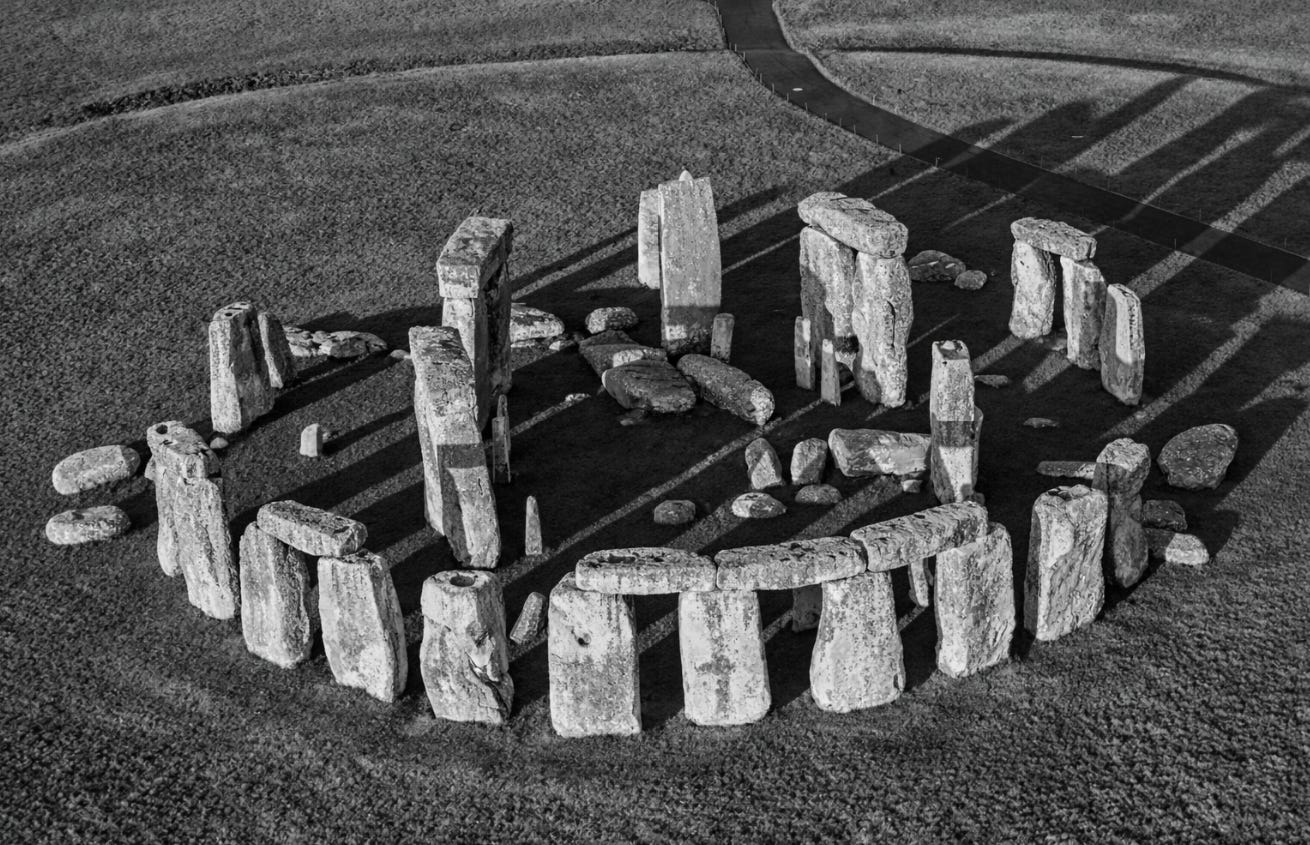
The solar year offers such a reference. The solstices and equinoxes mark observable turning points: maximum light, minimum light, and the two points of balance. These events recur whether or not they are recorded.
Within the broader stellar background, the Sun’s annual path can be located rather than divided. Astronomically, the solar track passes through an uneven sequence of constellations within the zodiacal band. The familiar twelve equal signs represent a numerical simplification. Observationally, the path spans thirteen recognizable stellar regions, including the interval commonly identified with Ophiuchus. The geometry is irregular, and the irregularity reflects the sky rather than a preference for symmetry.
Where time is defined by stellar position, the year closes when the Sun returns to the same background reference. Closure is geometric rather than arithmetic.
Within this framework, the Moon occupies a different role. Lunar cycles do not resolve cleanly into the solar year. Thirteen lunations approximate the annual cycle but do not complete it. Systems built on lunar counting therefore require periodic adjustment. Yet the Moon provides something the solar cycle does not: rhythm. Phases structure biological timing, tidal behavior, agricultural practice, and the felt cadence of time. The Moon articulates experience within the larger solar framework rather than defining the year itself.
In a positional system, nothing requires correction because nothing is being accumulated. The sky maintains the cycle. Observation replaces administration.
This distinction becomes visible in ordinary experience. Anyone who has watched the length of daylight change through the year, or noticed the Sun rising and setting at different points along the horizon, has already encountered time as movement rather than number.
A positional calendar is therefore not a cultural invention in the usual sense. It is a method of recognition. Historical systems approach this condition from different directions, but where counting replaces position, drift eventually appears.
What emerges from comparison is a structural principle. Time behaves as a cycle of returning position. Numerical systems approximate that cycle; observational systems locate it.
Where independent observation returns to the same position without correction, coherence becomes visible. This reflects the principle described in Truth Has a Coherent Structure: alignment reveals itself through stable recurrence.
The solar cycle does not adjust to human counting. As outlined in An Explanation of Natural Law, structure persists where systems conform to constraint, and drift appears where they do not.
A calendar fully anchored to observable position does not need to be maintained. It changes as the sky changes. Its stability comes from correspondence rather than adjustment.
Such a system does not tell time.
It recognizes when the cycle has returned.
And where recurrence closes without intervention, structure becomes visible.