

For several decades, advanced states behaved as though material security had become an outdated concern. Energy could be imported, components could be sourced globally, inventories could be minimized, and strategic dependence could be hidden behind the language of efficiency, trade, and comparative advantage. That assumption is now failing. States are again stockpiling critical materials not because they have become more nationalistic in some abstract sense, but because they have rediscovered a harder reality: industrial sovereignty depends on secure access to physical inputs that cannot be improvised once a system is under pressure. What is returning is not simply commodity planning. It is the older recognition that a modern state is only as sovereign as the materials on which its military, energy, transport, semiconductor, and communications systems actually depend.
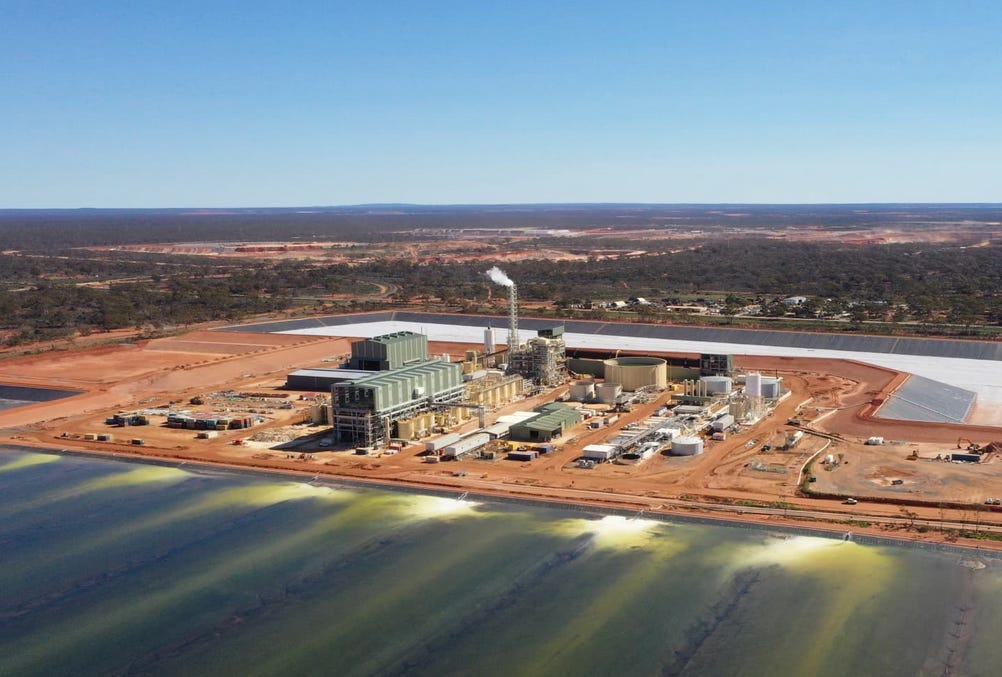
The change matters because most public discussion still treats critical materials as a narrow industrial issue, usually tied to batteries, electric vehicles, or the energy transition. That is too small. The real issue is that modern systems are built on a relatively short list of non-substitutable or slow-to-substitute materials whose absence does not merely raise prices but disables capacity. Rare earth elements are one example, but so are graphite, copper, lithium, cobalt, nickel, gallium, germanium, antimony, and a wider class of processed mineral inputs that sit deep inside power systems, weapons systems, industrial machinery, data infrastructure, and advanced manufacturing. When those materials are geographically concentrated at the mining stage, and even more so at the refining and processing stage, the result is not an efficient global market. It is a latent coercive structure waiting for stress.
Once that concentration is understood, stockpiling stops looking irrational. It becomes a logical response to a supply system whose visible flexibility conceals deep fragility. A state that cannot secure processed rare earths, magnet materials, battery inputs, copper concentrates, or specialist metals cannot simply vote its way out of dependence when disruption comes. Permitting new mines takes years. Building refining capacity takes years. Constructing chemical processing chains takes years. Training the workforce and qualifying the material for defense, aerospace, semiconductor, or grid use takes longer still. In other words, the real problem is not that a shortage might occur tomorrow. It is that once a shortage begins, the timeline for remedy is radically mismatched to the timeline on which governments must preserve social order, military readiness, industrial continuity, and political legitimacy. Stockpiling is therefore less about abundance than about time. It is the purchase of survival time in a world where replacement capacity cannot be created at political speed.
This is why the new material politics is converging on sovereignty. The European Union’s Critical Raw Materials framework, the United States’ growing emphasis on strategic reserves, and the United Kingdom’s increasing attention to secure domestic and allied supply all point in the same direction. These are not isolated industrial policies. They are admissions that reliance on concentrated external processing has become strategically dangerous. The vocabulary itself has shifted. Governments no longer speak only about procurement or competitiveness. They speak about resilience, diversification, strategic projects, recycling, domestic processing, allied supply, and reserves. The language shows that the issue has moved from commerce into statecraft.
Japan is particularly revealing because it recognized this vulnerability earlier than many Western states were willing to do. Its stockpiling system is managed through JOGMEC, now the Japan Organization for Metals and Energy Security, a public agency whose role includes helping secure stable access to critical resources for Japanese industry. What was once treated as a somewhat specialized national response now looks more like an early recognition of structural reality. Japan’s long effort to diversify away from concentrated dependence, including partnerships with Australia, the United States, and now Europe, shows that the issue is not rhetorical. It is operational. Material sovereignty in this sense does not require full self-sufficiency. It requires enough domestic, allied, recycled, and reserved capacity that no single external choke point can disable the system.
The deeper point is that stockpiling is not only about war preparation, although war risk plainly sharpens the logic. It is also about the failure of the just-in-time model in domains where interruption is politically intolerable. For many years, states outsourced resilience to markets and assumed that price would summon supply when needed. That assumption works tolerably well for replaceable goods with broad production bases and short lead times. It fails for materials whose extraction is geographically concentrated, whose refining is technically specialized, whose environmental permitting is slow, whose substitutes are weak, and whose role inside final systems is invisible until absence becomes disabling. The market can allocate flow under normal conditions. It cannot guarantee sovereign continuity under stress. This dynamic corresponds directly with the structural fragility described in The Global Supply Chain System, where continuous-flow architectures create efficiency precisely by eliminating the redundancy that genuine resilience requires.
China’s role makes the logic still clearer. The issue is not merely that China has large market share. It is that processing concentration can be converted into selective pressure. Recent export controls and restrictions involving gallium, germanium, antimony, graphite, and rare earths have shown how quickly a material dependency can become a political instrument. Even where restrictions are eased, the lesson is not erased. Once a state or bloc has seen that access can be narrowed administratively, the old assumption of neutral supply no longer holds. The supply chain has revealed itself as a jurisdictional system. What looks like trade in peacetime becomes leverage under strain. Stockpiling follows naturally from that realization, because states cannot base military readiness, semiconductor production, or grid resilience on the continued goodwill of an external processor that possesses both the means and the demonstrated willingness to tighten access.
There is also a more uncomfortable implication. Material sovereignty is expensive, slower, and less elegant than the globalized model it is beginning to replace. Redundancy costs money. Domestic refining costs money. Strategic reserves tie up capital. Allied sourcing can be less efficient than concentrated sourcing. Recycling systems require time, regulation, and investment. Yet this is precisely why the change is so significant. States are moving in this direction not because it is cheaper, but because they increasingly understand that the previous model was only cheaper on the assumption of uninterrupted peace, stable shipping lanes, politically neutral suppliers, and no serious contest over industrial survival. As those assumptions weaken, the apparent cheapness of global dependence starts to look like deferred strategic cost.
This is why the return of stockpiles should be read carefully. It is not a technical sidebar to climate policy or industrial policy. It is a signal that states no longer fully trust the continuity of the material order on which their economies depend. Hoarding is what systems do when they cease to believe that the next shipment can be assumed. In that sense, strategic stockpiles are a visible confession, much as physical gold movement can serve as a signal of stress before formal language catches up, a logic explored in Gold as Signal. They reveal that modern sovereignty was never really post-material at all. It merely outsourced the material basis of its own survival and called that arrangement efficiency. Now that the illusion is thinning, states are rediscovering a more durable principle: a country that does not control, secure, or reserve the substances its essential systems cannot function without does not possess full sovereignty in any serious sense. It possesses conditional access, granted for as long as the external structure remains cooperative.
The significance extends well beyond mining. Once governments accept that some materials are too foundational to leave wholly to market flow, the same reasoning begins to migrate outward. Energy systems, semiconductor systems, agricultural inputs, shipping lanes, industrial spares, transformers, and other supposedly mundane dependencies start to look different. Each becomes a question not merely of supply, but of survivability. That wider logic is closely related to the pattern described in Agricultural Systems and Structural Fragility in Food Production, where efficiency, concentration, and uninterrupted flow conceal the absence of true resilience until disruption arrives. Strategic stockpiles of minerals are therefore one of the clearest signs that states have begun to move from an era of assumed abundance into an era of managed scarcity, controlled exposure, and selective economic hardening. The language may remain administrative. The underlying shift is older and more serious than that. It concerns what a state must be able to preserve, under pressure, if it is still to govern itself at all.