

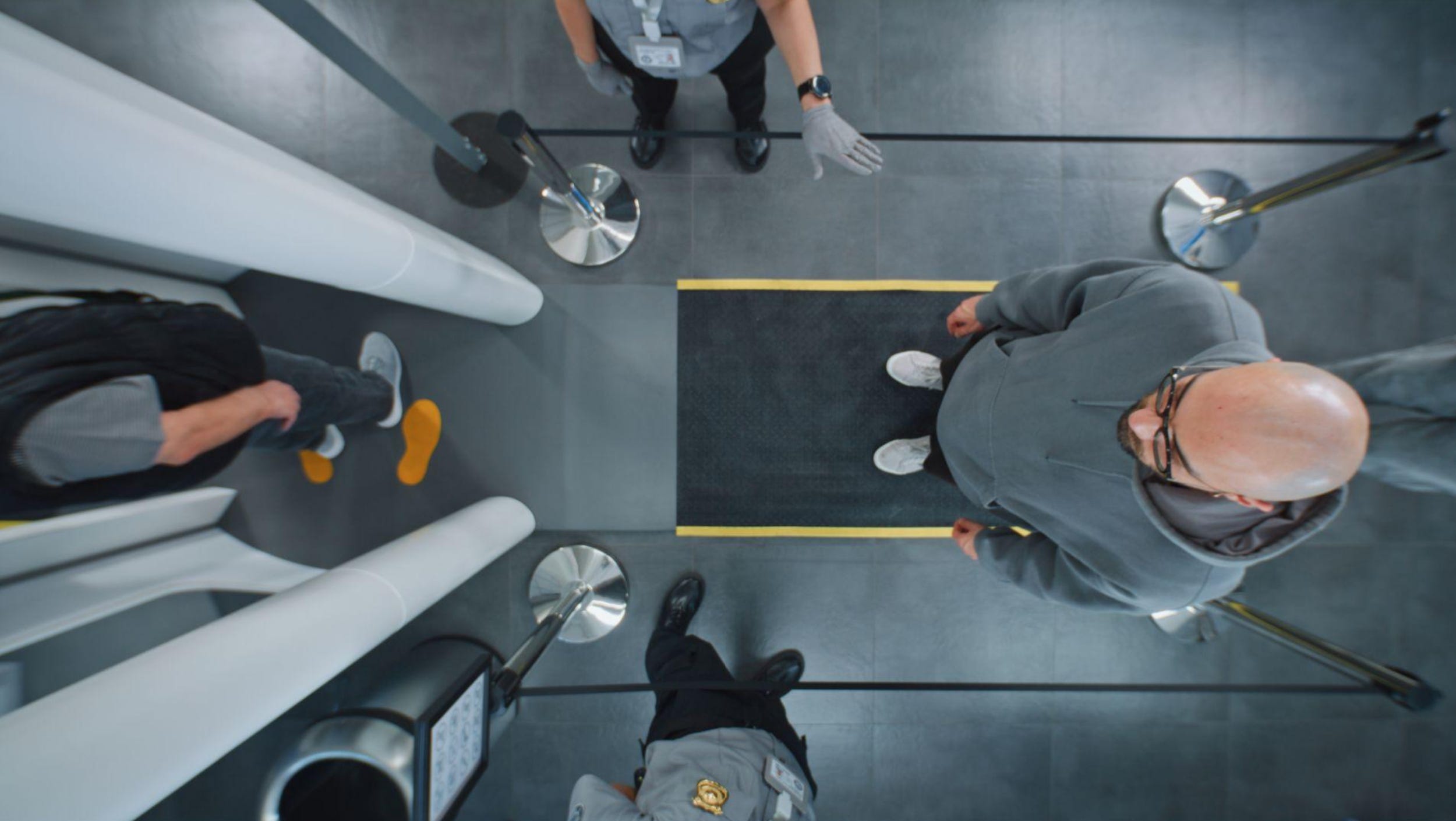
The American flying experience no longer feels like a service transaction. It feels like managed submission. The traveler arrives having paid for transport, but is immediately absorbed into an architecture of suspicion: documents checked, body scanned, bags measured, liquids restricted, shoes removed or conditionally permitted, movements directed, boarding groups policed, overhead space rationed, tone sharpened, and compliance treated as the first duty of travel.
This is not merely a complaint about inconvenience. Inconvenience is tolerable where it serves a coherent purpose. What makes the modern American flying experience so miserable is the combination of repetition, surveillance, command, and indifference. The passenger is not treated as a customer whose time, dignity, and comfort matter. He is treated as a managed object moving through a risk-control machine.
The evidence of dissatisfaction is not hidden. In March 2026, Ipsos found that 67 percent of Americans believed the travel experience at U.S. airports had worsened compared with the previous year, while only 2 percent said it had improved. U.S. PIRG reported that complaints against U.S. airlines reached another record in 2024, with 66,675 complaints against U.S. carriers, up nearly 9 percent from 2023 even though passenger volume rose only 4 percent. Total aviation complaints reached 89,094, the second-highest level ever recorded, exceeded only by the extreme disruption year of 2020. The public has not been quiet. The system has simply learned to absorb the noise.
Complaints are counted. Surveys are published. Rankings are released. Press statements are issued. The passenger is asked to adapt.
The misery begins before the aircraft is anywhere in sight. The traveler enters the airport and passes into a permission sequence. He must prove that he may check a bag, prove that he may enter the secure area, prove that his body and belongings may pass inspection, prove that he is entitled to approach the gate, prove that his bag is the correct size, prove that his passport matches his face, and prove again that he is the person entitled to board. The system is not organized around service. It is organized around repeated conditional permission.
That is the same structural movement examined in The Second Amendment as a Permit System: the shift from ordinary liberty into administered permission. In that essay, the issue was the transformation of a retained right into an approved activity, where the citizen must justify the exercise of something that should not depend on official favor. The airport is a different domain, but the structure is recognizable. Movement is not treated as ordinary. It is administered.
The passenger is not asked once. He is asked repeatedly. Boarding pass. Passport. Face. Bag. Seat assignment. Group number. Zone. Status. Compliance. Each step has its explanation. Together, they create something else. The traveler is made to pause, present, submit, and wait for permission to proceed. One check may be security. A repeated sequence of checks becomes instruction.
This is why the experience can feel like ritualized submission. The point is not simply that the traveler is inconvenienced. It is that the traveler is repeatedly lowered into a subordinate posture before institutional authority. He removes. He opens. He displays. He waits. He is directed. He is corrected. He is scanned. He is permitted. The language is safety, efficiency, or process. The form is unmistakable. The passenger submits; the institution permits.
The facial-recognition layer makes the inversion especially clear. After the traveler has already passed through the full inspection sequence, the process increasingly repeats itself at the gate. TSA describes Touchless ID as using facial comparison technology for identity verification, and CBP describes biometric facial comparison as comparing the traveler’s live face with travel-document images in airport entry and exit environments. The language is speed and convenience. The experience is another demand for proof.
The passenger may have already been screened, cleared, documented, and admitted into the secure area. Yet at boarding he may still be required to hold out the boarding pass, open the passport to the photograph page, and present his face to a biometric system before entering an aircraft that is likely already crowded, delayed, and packed with people trying to force bags into overhead space. The absurdity is that even in a system already compressed to discomfort, every burden still falls on the passenger. More proof. Less space. More commands. Less dignity.
This connects directly to Inside the Warrantless State. That essay examined what happens when institutional power converts intrusion into administrative process. The airport is not the home, and the comparison should not be overstated. But the logic of normalization is related. Inspection becomes ordinary. Identification becomes continuous. Verification becomes the environment.
Most airline employees, TSA officers, and airport workers are not trying to degrade anyone. Many are simply working inside the structure they inherited. But the structure itself has accumulated in one direction. Each layer was added in the name of safety, liability, identity, efficiency, or border control, and almost none has been meaningfully removed. The result is more verification, more surveillance, more command, more records, and more proof. The passenger is not encountering one bad policy. He is moving through accumulated institutional decisions that all resolve the same way: control first, dignity later, if at all.
That is the pattern described in Normalization Drift: How Temporary Measures Become Permanent Structures. Emergency measures are introduced as necessary and temporary, but the second assurance is where the pattern fails. Temporary measures persist, adapt, and become part of the operating environment. What was introduced as an exception becomes normal procedure. The airport is one of the most visible places where ordinary people encounter this drift.
The post-9/11 flying system did not merely add security. It changed the civic meaning of flight. The passenger became a suspect category. Movement became conditional. The right to travel was reconfigured as a permission sequence. Document, body, bag, face, behavior: each becomes part of the inspection field. Whether one calls this security theatre, bureaucratic control, or ritualized submission, the practical effect is the same. The traveler is taught that movement occurs only by permission.
The airlines themselves have absorbed this posture. They do not merely transport passengers. They manage them. Gate agents often speak in the language of command: stand here, move there, check this, remove that, consolidate the bag, wait your turn, do not board yet, step aside. Some of this is operational necessity. Much of it is tone. Over time, the passenger ceases to feel like the party to a commercial exchange and begins to feel like a contained variable inside someone else’s process.
This is where the hostage feeling enters. The traveler may have paid the airline, but once inside the system he has almost no practical freedom. He cannot object without risking delay, scrutiny, removal, or loss of the flight. He cannot negotiate the terms. He cannot meaningfully exit without forfeiting the journey. He may be spoken to sharply, processed slowly, redirected repeatedly, and charged for privileges that once belonged to the basic act of travel. He is not a literal hostage. But the structure borrows from captivity: dependence, restricted movement, command, waiting, and permission from an authority that owes him little in the moment.
This is not accidental at the level of experience. A system built around suspicion, scarcity, and compliance will produce tense passengers and hardened staff. Airlines then respond to the atmosphere they helped create with still more control. The system generates the behavior that justifies its own continuation.
Even satisfaction surveys that show isolated improvement do not refute this. J.D. Power’s 2025 North America Airline Satisfaction Study found overall passenger satisfaction up six points, helped by slightly lower ticket prices and lower passenger volume during the study period. That matters. Price matters. An on-time arrival matters. A polite flight attendant still matters. But those measures capture fragments of the experience. They do not erase the structure. A passenger may have a tolerable flight inside a degrading system. That does not make the system dignified.
The central failure is constitutional in the ordinary human sense. A legitimate system of transport should remain proportionate to its purpose. It should move people safely without humiliating them. It should protect passengers without treating them as presumptive threats. It should enforce rules without cultivating contempt. Dignity is not a luxury added after efficiency. It is one of the measures by which efficiency must be judged.
The modern American airport does the opposite. Its stated purpose is movement, but its operating culture is obstruction. Its commercial purpose is service, but its practical posture is control. Its justification is safety, but its emotional signature is suspicion. Its passenger is called a customer at the point of sale. After that, he becomes a risk object with documents.
The system does not need to announce this transformation. It enacts it. It enacts it every time a traveler is checked after already being checked, scanned after already being scanned, identified after already being identified, and commanded after already complying. The degradation lies in the repetition. It lies in the fact that no completed act of compliance seems to restore trust. Clearance is temporary. Permission expires at the next checkpoint.
That is why public dissatisfaction changes so little. Complaints become data. Data becomes reporting. Reporting becomes administrative activity. The passenger’s experience is recognized, but not allowed to govern. His frustration is measurable, but not consequential.
American air travel is therefore not miserable because airports are crowded or flights are sometimes delayed. Those are operational problems. The deeper misery comes from being forced through a system that treats ordinary movement as a managed threat condition. The passenger senses the inversion even when he cannot name it. He paid for passage. He receives permission.
This is why the experience lingers after the flight. The body remembers being managed. The mind remembers being checked. The irritation is not merely about a line, a bag, a scanner, or a rude command. It is about the accumulated lesson of the journey: you are not being served; you are being processed.
That is the truth the surveys keep reporting and the system keeps refusing to hear. American passengers are not simply dissatisfied. They are reacting to a structure that has made degradation ordinary and then called it safety. This did not happen by accident. Every layer has moved in the same direction: more checking, more surveillance, more command, more extraction, less trust. Passengers are not angry because flying is imperfect. They are angry because the system has taught them, stage by stage, that after they have paid, complied, waited, and submitted, they are still not customers. They are passengers awaiting permission.