

This essay is part of the Strategic Intent Analysis archive at strategicintentanalysis.com. The method is simple: begin with what is observable, then test the story against the structure beneath it.
The modern bunker is usually treated as a curiosity of wealth. A technology founder buys remote land. A billionaire adds an underground shelter to a private estate. A converted missile silo becomes a luxury residence. A former military island is reframed as a resort opportunity. Each story is reported as private anxiety, luxury excess, apocalypse insurance, or eccentric planning. The cases are kept separate, and separation keeps the pattern from forming.
Connected, they look different.
The common features are distance, enclosure, stored resources, controlled access, private security, independent power, protected water, hardened space, and a plan for leaving ordinary systems behind. The people buying or building these structures may not all know the same thing. Some fear civil disorder. Some fear cyberattack, pandemic, war, financial collapse, artificial intelligence, grid failure, solar disruption, ecological instability, or political backlash. Some imitate what others in their class are doing. Some simply have enough money to turn anxiety into architecture.
But imitation does not weaken the evidence. It confirms that the pattern has entered elite culture. Those closest to capital, technology, state continuity planning, and strategic land acquisition are not behaving as though the surface world is expected to continue without interruption.
That is the modern fact. The older fact is that long memory rarely treated time as a straight line. As argued in The Turning of the Age, the older world understood time through recurrence: year, season, growth, decline, burial, renewal, kingdom, corruption, rupture, and return. The age was not a belief imposed on the sky. It was a way of naming the slow change of the background field behind the spring equinox marker. The annual cycle renews life. The age-cycle reviews civilization.
That distinction matters. The year teaches generation. The age teaches correction. Ordinary time unfolds through growth, fullness, decline, and return. Age-time moves more slowly, through reversal, review, and the testing of accumulated order. What has been built forward without proportion is brought back under examination.
The old accounts do not describe the end of an age as a harmless symbolic transition. They repeatedly join physical disruption with spiritual or moral disorder. Fire and water recur. Flood, conflagration, earth movement, darkness, loss of law, false order, remnant survival, seed preservation, enclosure, mountain, cave, ark, and renewal recur. The language differs by tradition, but the structure remains visible: order declines, memory is lost, law is broken, the world is corrected, and something living is preserved through the rupture.
Plato’s Timaeus gives one of the clearest versions. The Egyptian priest tells Solon that mankind has suffered and will again suffer many destructions, the greatest by fire and water. The same account links catastrophe with memory loss. The Greeks remember only one flood because they lack the deeper record. Civilization forgets when the institutions and records that preserve memory are periodically broken. Atlantis then appears as more than a lost island story. It is a record of violent water and earth movement, sudden disappearance, and the collapse of a civilizational memory field.
Plato’s Statesman adds the idea of reversal. Hesiod’s Works and Days adds the moral descent from gold toward iron. The Hindu yuga tradition adds the loss of dharma and restoration after Kali. The Zoroastrian story of Yima’s Vara adds warning, enclosure, seed, and preservation through a terrible winter. The Popol Vuh adds failed human forms, destruction, remaking, and a humanity finally fitted to right relation. Hopi warnings add the relation between leaving the path of natural order and seeing imbalance appear through storm, earthquake, fire, flood, sickness, seasonal disorder, and social disorder.
These accounts should not be collapsed into one doctrine. Plato is not Hesiod. Hesiod is not the Hopi. The yugas are not the Popol Vuh. Yima’s Vara is not Atlantis. But each adds a different structural element to the same field: memory loss, reversal, moral decline, protected remnant, failed form, natural imbalance, and renewal after destruction. The details vary. The pattern remains. Time is not a neutral line. Ages have quality. Disorder accumulates. Law is forgotten. Rulers become unjust. Human beings lose measure. Rupture comes. A remnant remains. Life continues under changed order.
The physical record makes this harder to dismiss. The earth does not preserve only slow change. It preserves sequences of violent change.
The Channeled Scablands are not ordinary erosion. They are the remains of repeated catastrophic flooding. Glacial Lake Missoula, held by an ice dam in northern Idaho, released floodwaters across Washington, down the Columbia River into Oregon, and onward toward the Pacific. The late-Pleistocene Missoula floods were not a single accident. The evidence supports many floods over thousands of years, with more than twenty-five major floods through the Columbia River valley and multiple events at extraordinary discharge levels. Water filled. Pressure accumulated. Ice failed. The land was torn open. Then the process repeated. House-sized boulders moved. Canyons were cut. Oregon and Washington still carry the scars.
The importance is not only scale. It is sequence.
Climate records show the same refusal to behave as smooth gradualism. Dansgaard–Oeschger events are abrupt climate shifts recurring every several thousand years on average during the last glacial period. Heinrich events are larger ice-discharge events separated by longer intervals, often discussed around the scale of ten thousand years. Neither sequence is strictly periodic. That caution matters. The record does not give a simple clock with perfect intervals. It gives recurrence, threshold behavior, clustering, and sudden reorganization.
The last major transition was not one clean event. It was a window of instability. The Younger Dryas began around 12,900 years ago and ended around 11,500 years ago. The end was abrupt, with Greenland temperature estimates rising dramatically in a very short interval. Then, after the world had already moved toward post-glacial conditions, the 8.2 kiloyear event brought another sudden cooling episode lasting roughly a century and a half before temperatures recovered. Sea level also rose dramatically after the last glacial maximum, by roughly 400 feet over the long transition into the present coastal world.
This is not a minor adjustment to coastlines. It is a world-map event. It erases plains, river mouths, coastal shelves, settlements, ports, and memory.
The event, if such a thing belongs to the turning of an age, may not be a single strike. It may be a transition window. Water moves. Ice fails. Seas rise. Temperatures shift. Storm tracks change. Earthquakes, volcanism, subsidence, drought, fire, migration, hunger, and political disorder may appear separately to institutions, but a threshold transition can bind them into one sequence. A civilization living through such a passage would not necessarily say, “the age is turning.” It would see disasters, shortages, migrations, failed harvests, broken ports, official explanations, emergency powers, and the sudden exposure of things that had been weakening for a long time.
The bridge between geological disruption and modern systems is threshold behavior. In the earth record, pressure can accumulate quietly until ice fails, water moves, temperature shifts, or coastlines are redrawn. In complex human systems, margin disappears in the same way: slowly while buffers still hold, then suddenly when the remaining capacity is gone.
This is where Stability Without Margin becomes important. Complex systems often look stable until they cross a threshold. Stress accumulates while outward performance remains acceptable. Buffers absorb pressure. Redundancy compensates. Confidence grows because visible measures remain calm. Then the margin is gone, and failure appears sudden. The crisis seems to begin when the system breaks, but structurally it began when margin started disappearing.
That pattern applies to modern civilization as much as to finance, supply chains, energy systems, or government administration. A society can appear stable while becoming less able to absorb shock. Efficiency removes redundancy. Centralization tightens dependency. Administrative systems preserve confidence while operational flexibility narrows. Public communication remains reassuring until multiple failures surface together. Collapse looks sudden because the margin disappeared first.
The older accounts describe age-ending in moral and sacred language. The physical record describes abrupt reorganization in water, ice, temperature, and land. Modern systems theory describes threshold behavior. These are not identical languages. They are different ways of seeing the same possibility: a system may carry accumulated stress for a long time, then reorganize quickly when the threshold is crossed.
The method for examining this cannot be passive belief or undisciplined speculation. The Method of Structural Inquiry supplies the proper standard. Begin with observation. Respect accepted facts. Test narratives against structure. Follow consequences over time. Treat coherence as evidence and contradiction as signal. Official narratives are evidence, not verdicts. They are claims to be tested against what systems actually do.
That is the correct discipline here. The question is not whether one can prove a date, name a mechanism, or claim that every elite actor knows the same thing. The question is whether observed behavior, older memory, physical recurrence, and institutional preparation form a coherent pattern that the public explanation does not adequately account for.
Modern public language fragments the field. One group is told to fear climate. Another is told to fear war. Another is told to fear pandemic, cyberattack, grid failure, solar storm, artificial intelligence, financial collapse, terrorism, supply-chain disruption, or civil disorder. Each category may contain real risk. The fragmentation prevents recognition of the larger pattern. The ruling structure prepares across categories. The public receives categories.
Continuity of Government is one of the clearest tells because it is not rumor. It is admitted architecture.
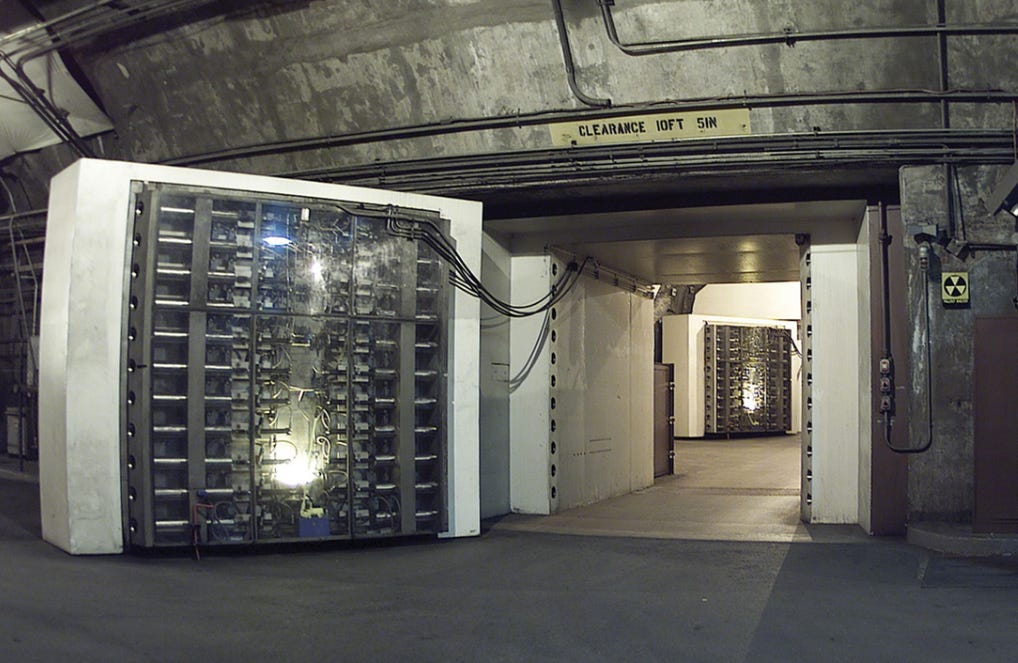
The United States does not merely write emergency plans. It maintains physical continuity sites. Raven Rock Mountain Complex, also known as Site R, is tied in defense budget and policy materials to continuity operations for the Office of the Secretary of Defense, the Joint Staff, and senior defense leadership. Washington Headquarters Services describes Raven Rock as a secure strategic battle command platform for senior leaders to execute mission-essential functions. FEMA’s national continuity structure includes the Mount Weather Emergency Operations Center. NORAD and USNORTHCOM identify Cheyenne Mountain as their Alternate Command Center. The former Greenbrier congressional relocation site, once secret and later exposed, shows that continuity planning has also included legislative relocation architecture.
These are not internet legends. They are the visible portions of a long-standing government survival system.
COG is the state’s bunker. Its public language is constitutional continuity, essential functions, emergency planning, and national resilience. Some of that is legitimate. A state has to consider extreme conditions. A serious household stores food, protects water, keeps tools, and thinks about heat, medicine, repair, and local resilience. A serious town considers fire, flood, earthquake, road failure, power loss, and medical disruption. Continuity planning is not wrong merely because it exists.
The problem is the structure of asymmetry. The public is told to trust continuity while the governing class prepares for interruption. Official systems plan how authority, records, communications, command, succession, and operational control will survive when ordinary conditions fail. The surface population receives reassurance and procedure. The deeper structure preserves command capacity.
This is the same public-protection problem examined in The Classified Security State. A system may present itself as defensive while transferring power from the public constitutional order into a protected operational domain. Secrecy may be justified as protection, but once action takes place behind walls the public cannot see, public judgment weakens. Citizens are asked to trust what they cannot evaluate. Consequences arrive in ordinary life, while authority preserves itself behind necessity.
COG belongs to that same field. It is not simply disaster planning. It is government survival planning. It asks who commands, where they go, what systems remain connected, which functions are preserved, and how authority continues when ordinary visibility fails. The public name is continuity. The structural question is continuity for whom, under whose control, and with what degree of public knowledge.
Private wealth shows the same assumption in personal form. Reid Hoffman, co-founder of LinkedIn, estimated that more than half of Silicon Valley billionaires had acquired some level of “apocalypse insurance,” such as a hideaway in the United States or abroad. Sam Altman has been reported describing a survival inventory including guns, gold, potassium iodide, antibiotics, batteries, water, gas masks, and land in Big Sur he could fly to. Mark Zuckerberg’s Kauai compound has been reported to include a 5,000-square-foot underground shelter, its own food and energy supplies, tunnels, heavy security, secrecy agreements, and total cost above $270 million. Peter Thiel’s proposed lodge in remote New Zealand was publicly described as bunker-like and placed in a remote alpine region of the South Island.
These are not identical projects. They do not prove a single plan. But they share the same grammar: distance, refuge, independent supply, controlled access, secrecy, and escape from ordinary public systems.
The people selling the future are buying exits from it.
Sazan Island shows the pattern in territorial form. The public story is development: a former military island becomes a luxury resort. Jared Kushner and Ivanka Trump are associated with the project. Albania’s Prime Minister Edi Rama presents it as modernization, tourism, and international investment. Kushner’s origin story places the discovery of Sazan during a yacht trip on a vessel owned by Nat Rothschild. The Albanian Strategic Investment Committee later approved a Kushner-linked project for Sazan, granting strategic-investor status to a development on land that was not ordinary coastal property but a former military island.
The Rothschild detail should not be overstated. It does not prove wider family control. Its significance is structural. A former White House insider, an Albanian prime minister, an elite financier’s yacht, and a hardened military island entered the same origin sequence before the public had meaningful visibility into the full consequences.
Sazan itself is the point: a former military island, strategically placed, restricted for decades, and carrying tunnels, bunkers, barracks, and hardened infrastructure beneath the language of leisure. The resort may be real. The tourism narrative may be sincere. But sincerity at the surface does not exhaust the structure. A bunker system under a resort remains a bunker system. A military island repackaged as hospitality remains a military island repackaged as hospitality.
The change in vocabulary is part of the evidence. Resort language can domesticate a strategic asset. Investment can move public territory into private control. Environmental controversy can distract from the deeper continuity question: why does hardened military geography become attractive to elite capital at this moment?
The age-turning frame gives these modern facts their scale. The modern world presents itself as permanent because its institutions depend on linear continuity. Markets must continue. Debt must continue. Digital systems must continue. Governments must continue. Administrative categories must continue. The public must believe that the surface order, however unstable, remains the only available order. Older accounts do not speak that way. They describe ages, decline, loss of law, destruction by water and fire, preservation through remnant, seed, ark, mountain, cave, high place, memory, and return.
This does not prove that the deepest actors know the date or form of a coming event. It does not prove that Sazan, Silicon Valley bunkers, private islands, high-ground purchases, and COG facilities are all part of one conscious plan. A disciplined argument does not need that claim. The preparation pattern is visible without it. The older warning structure is visible without it. The physical record of repeated disruption is visible without it. The threshold logic is visible without it.
Together they establish something more serious than speculation: the present order is being managed as though continuity is public doctrine but not private assumption.
The seriousness of an age-turn event may not be purely mechanical. This is the difficult implication. A flood or earthquake does not sort individual souls with visible precision. Innocent people suffer in physical disasters. Corrupt people sometimes survive. A physical reset is not a simple moral sorting machine. But it can destroy structures. It can remove ports, capitals, archives, financial centers, military installations, supply chains, surveillance systems, and false temples of authority. It can collapse the container in which inversion has been protected.
In natural-law terms, this does not mean disaster mechanically judges individual souls. It means rupture exposes relation, attachment, and the structures people have served. What did a person serve before rupture? What did an institution preserve? What did authority protect? Who listened? Who warned? Who hoarded knowledge? Who prepared only for private survival? Who preserved life, seed, water, family, memory, and truth? The event may not select by declared belief. It may reveal whether a person, household, institution, or regime is aligned with life or with the preservation of control.
This is why the bunker feels spiritually wrong even when it may be physically rational. Underground shelter can protect against certain dangers. It can also become a tomb. It assumes danger remains outside, survival depends on enclosure, separation is safety, and the old hierarchy can wait below the surface and return when conditions improve. That is not the same as living preparation. High ground, water, soil, tools, animals, seed, household responsibility, local repair, and truthful relation to natural order belong to another model.
The bunker model is enclosure. The natural-order model is alignment.
Enclosure preserves the body by cutting it off from the living field. Alignment seeks continuity with the field of life. A bunker waits for systems to hold. A living place can observe, repair, grow, adapt, and share.
Preparedness should not be romanticized. High ground does not guarantee safety. Land does not remove danger. Wells can fail. Roads can close. Fire can move. Earth can shake. Communities can fracture. No place is outside consequence. But some forms of preparation are more coherent because they preserve relationship instead of only preserving enclosure.
The indictment is not that elites prepare. Preparation is natural. The indictment is that they prepare in a form consistent with the world they have built: secrecy, hierarchy, withdrawal, controlled access, private security, hidden infrastructure, and continuity of command. They do not warn as a natural authority would warn. They do not rebuild local resilience as a lawful authority would rebuild it. They preserve the same structure that produced dependency and call that preservation continuity.
The turning of the age may be the missing frame because it is large enough to hold the convergence. It does not reduce the pattern to one policy failure, one environmental risk, one war scenario, or one technological concern. It allows ancient warnings, geological recurrence, possible periodicity, official continuity architecture, private refuge behavior, strategic islands, high ground, and spiritual disorder to be examined together without forcing premature certainty.
The disciplined conclusion is simple. We do not know with certainty what the deepest actors believe is coming. We do know that preparation is occurring. We do know that official continuity systems exist. We do know that private elites have built or acquired refuge structures. We do know that hardened military geography can be reintroduced under softer language. We also know that the physical record contains sequences of abrupt disruption, and that older traditions remember age-turning as physical and moral discontinuity. Those facts do not prove a date or a mechanism. They establish a pattern.
The bunker is the confession. It reveals that those closest to power do not fully believe in the continuity they sell to the public. The turning of the age supplies the older memory that discontinuity is not an aberration but a recurring condition of world structure. The question is no longer whether isolated wealthy people are afraid. The question is whether modern power is already arranged around an expectation that the surface order will fail.
If so, survival alone is too small a frame. A corrupted order may try to pass through rupture by burying itself beneath the earth. A lawful order would prepare differently. It would preserve truth in language, responsibility in households, water in place, food in living systems, authority under constraint, and memory without concealment. The age does not turn merely in the sky. It turns through the structures that can continue and the structures that cannot. The bunker shows what power fears. Natural order shows what may endure.
The method, subjects, and selected essay index for Strategic Intent Analysis are organized at strategicintentanalysis.com.