

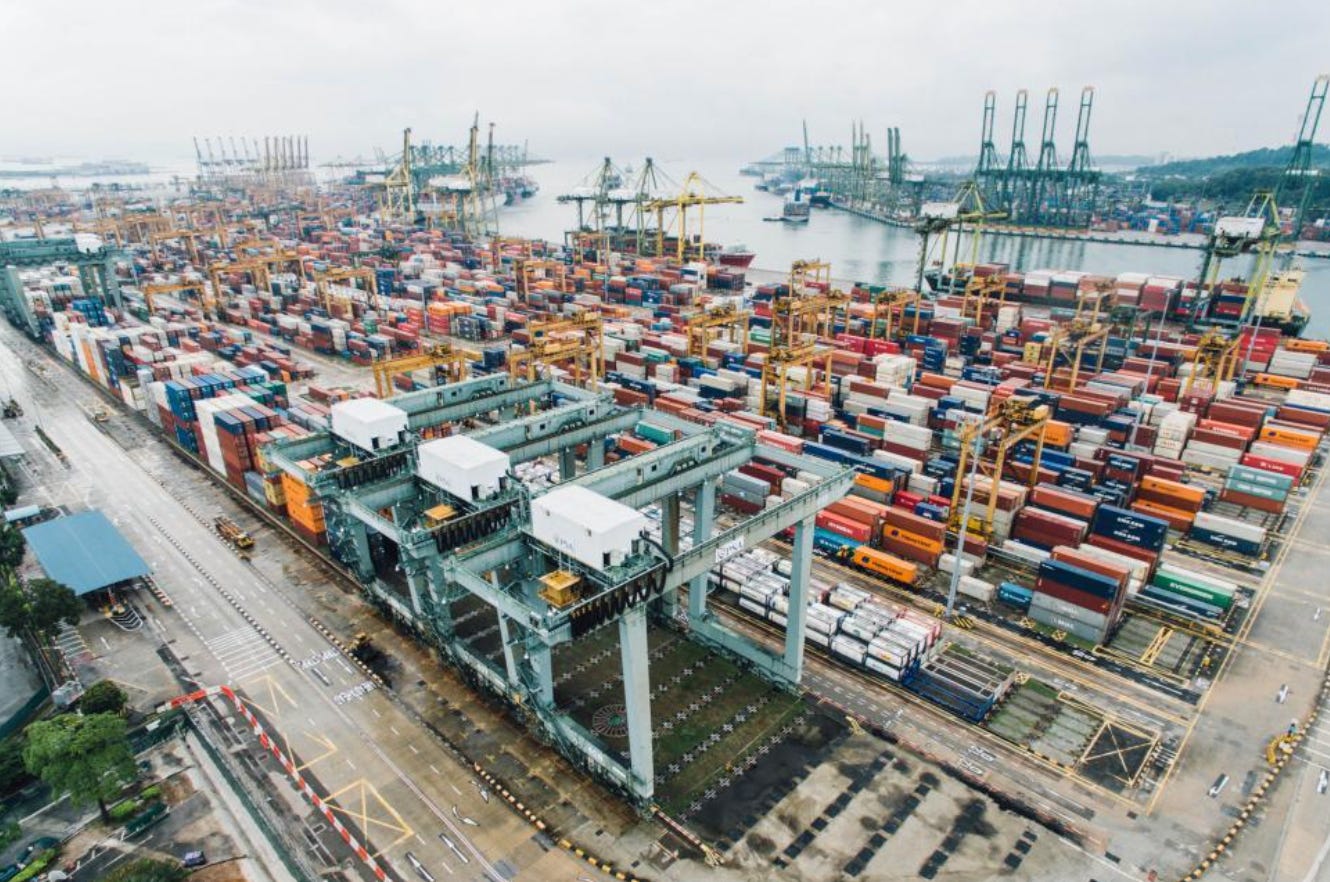
Modern systems are designed around a simple principle: eliminate waste.
Unused capacity is treated as inefficiency. Redundancy is treated as cost. Inventory is treated as failure. Idle time is treated as mismanagement. The highest-performing system, by this logic, is the one in which every component is fully utilized and every resource is continuously optimized.
Under stable conditions, this approach works. Output increases. Costs fall. Performance metrics improve. The system appears disciplined, modern, and well managed.
The problem is structural. Efficiency removes margin, and margin is what allows a system to survive change.
Resilience depends on slack capacity, alternative pathways, and stored buffers that are rarely used in normal conditions. These elements do not improve short-term performance. They reduce it. They tie up capital, labor, and attention in resources that appear idle. From a narrow operational perspective, resilience looks like waste.
Over time, optimization removes these apparent inefficiencies. Backup suppliers are eliminated. Spare capacity is reduced. Inventory is minimized. Staffing is calibrated to average demand rather than peak demand. Financial reserves are replaced with leverage. Supply chains are extended across continents to capture small cost advantages.
Each individual decision is rational. Each improves measured performance. The system becomes lean, responsive, and efficient.
It also becomes brittle.
When conditions change—when demand spikes, supply is interrupted, credit tightens, or a component fails—the optimized system has no room to adjust. There are no buffers to absorb shock, no redundancy to reroute flow, and no slack to accommodate deviation from the expected pattern. Small disruptions propagate quickly because there is nothing available to contain them.
Recent events have made this pattern visible. During the pandemic, just-in-time global supply chains delivered record efficiency until transportation interruptions and factory shutdowns left manufacturers without critical components and retailers with empty shelves. Hospitals operating at near-full utilization struggled to absorb patient surges, forcing care delays and emergency triage decisions. Commercial aviation networks built around maximum aircraft utilization experienced system-wide disruption when weather or staffing interruptions removed even small amounts of capacity.
Energy systems show the same structure. The Texas power grid operated with narrow reserve margins in order to reduce cost and increase market efficiency. When extreme winter conditions reduced generation and increased demand simultaneously, the system had insufficient buffer capacity, leading to cascading outages affecting millions of people.
Financial systems exhibit an even more compressed version of the dynamic. Banks optimize balance sheets for return under normal liquidity conditions. When depositor confidence shifts, as seen in the rapid collapse of Silicon Valley Bank, the absence of sufficient liquidity margin turns a manageable adjustment into a self-reinforcing failure that unfolds in days rather than years.
In each case, performance had been optimized for stability, not for variability.
The incentive driving this behavior is institutional rather than technical. Organizations are evaluated on short-term efficiency metrics: utilization rates, cost reductions, return on capital, throughput, and quarterly performance. The value of unused capacity is difficult to quantify because it appears only when conditions deteriorate. Until that moment, resilience produces no measurable benefit.
This dynamic reflects a broader structural pattern examined in The Productivity Trap: When Measurement Replaces Value. When performance indicators become the objective, organizations optimize what can be measured rather than what preserves long-term system health. The resulting improvements are real, but they apply to the metric rather than to the underlying resilience of the system.
Efficiency, in this sense, becomes a form of measurement inversion. The system improves the numbers that represent performance while quietly degrading the structural conditions that make performance possible.
Over time, the entire operating environment shifts toward minimum margin. Suppliers operate with little inventory. Logistics networks run at full capacity. Energy systems maintain narrow reserve margins. Financial institutions depend on continuous liquidity. Each participant assumes stability in the surrounding system because their own survival depends on it.
The result is tight coupling across the entire structure. Disturbance in one node propagates quickly because every other node is already operating near its limits.
When disruption occurs, the consequences are nonlinear. Systems that function smoothly for long periods fail rapidly once stress exceeds the narrow operating range created by optimization. The visible shock—the shortage, outage, or financial freeze—appears sudden, but the vulnerability was built gradually through the cumulative removal of margin.
Infrastructure loss illustrates how little flexibility optimized systems retain. As discussed in After Nord Stream: Risk in a World of Irreversible Loss, the destruction of a single energy corridor did not simply reduce supply; it removed optionality within an already tightly optimized system. The result was not a temporary disruption but a long-term structural constraint that reshaped energy markets, industrial costs, and geopolitical alignment.
From a natural systems perspective, the pattern is inverted. Biological and ecological systems rarely operate at maximum efficiency. They maintain redundancy, diversity, and stored energy precisely because environments change. These features reduce short-term performance but allow the system to absorb disturbance without systemic failure.
Human systems are increasingly rewarded for removing exactly those features.
The efficiency trap therefore operates in two stages. First, optimization converts resilience into performance by eliminating margin. Second, it transfers risk forward in time. Losses that would once have appeared as small, frequent inefficiencies instead accumulate invisibly until they emerge as large, sudden failures.
Efficiency does not eliminate risk. It compresses it.
This compression explains why modern disruptions feel abrupt and disproportionate. Systems that once failed locally and gradually now fail systemically and rapidly because the mechanisms that once absorbed disturbance have been removed.
Most people encounter this pattern in ordinary ways: the flight network that collapses after a weather delay, the emergency department that cannot admit patients during a surge, the delivery system that stops functioning when one distribution center closes, the customer service operation that has no capacity to handle unexpected demand. These experiences are not isolated management problems. They are the visible edge of a structural condition.
Efficiency increases performance only within a narrow range of stability. Outside that range, it accelerates breakdown.
The structural lesson is not that efficiency is harmful. It is that efficiency without margin is not optimization at all. It is the systematic conversion of resilience into short-term performance and the transfer of risk into the future.
Systems built this way do not fail because they are inefficient.
They fail because they are too efficient to survive change.