

Modern industrial societies are often described as complex systems. The description is accurate but incomplete. The more precise observation is architectural: modern civilization operates through a layered structure of infrastructures that depend upon each other continuously. Each layer appears stable when examined independently, yet the functioning of the whole depends upon the uninterrupted operation of the entire structure. What appears as complexity at the surface level is, in practice, a tightly coupled stack.
At the foundation of the stack lies energy. Electricity and fuel sustain nearly every activity that occurs within modern institutions. Manufacturing, transportation, digital communication, financial clearing systems, and administrative governance all depend upon continuous energy flows. The dependency is not indirect. Energy is not simply one sector among many. It is the physical precondition for the functioning of the systems built above it.
The increasing concentration of critical infrastructure has already exposed how fragile this foundational layer can become. Modern energy networks often depend on a small number of physical nodes whose disruption can propagate rapidly through wider systems, a pattern examined in Energy Infrastructure Concentration and System Fragility.
Above energy sits the computational layer that coordinates modern activity. Digital networks now manage the routing of aircraft, the timing of shipping movements, the operation of electrical grids, the execution of financial transactions, and the scheduling of production. The visible result is an impression of distributed coordination in which millions of independent actors appear to interact through market processes. In operational terms, however, this coordination occurs through a relatively small number of technological nodes: data centers, exchanges, routing systems, and network control architectures. Computation does not replace infrastructure. It orchestrates it.
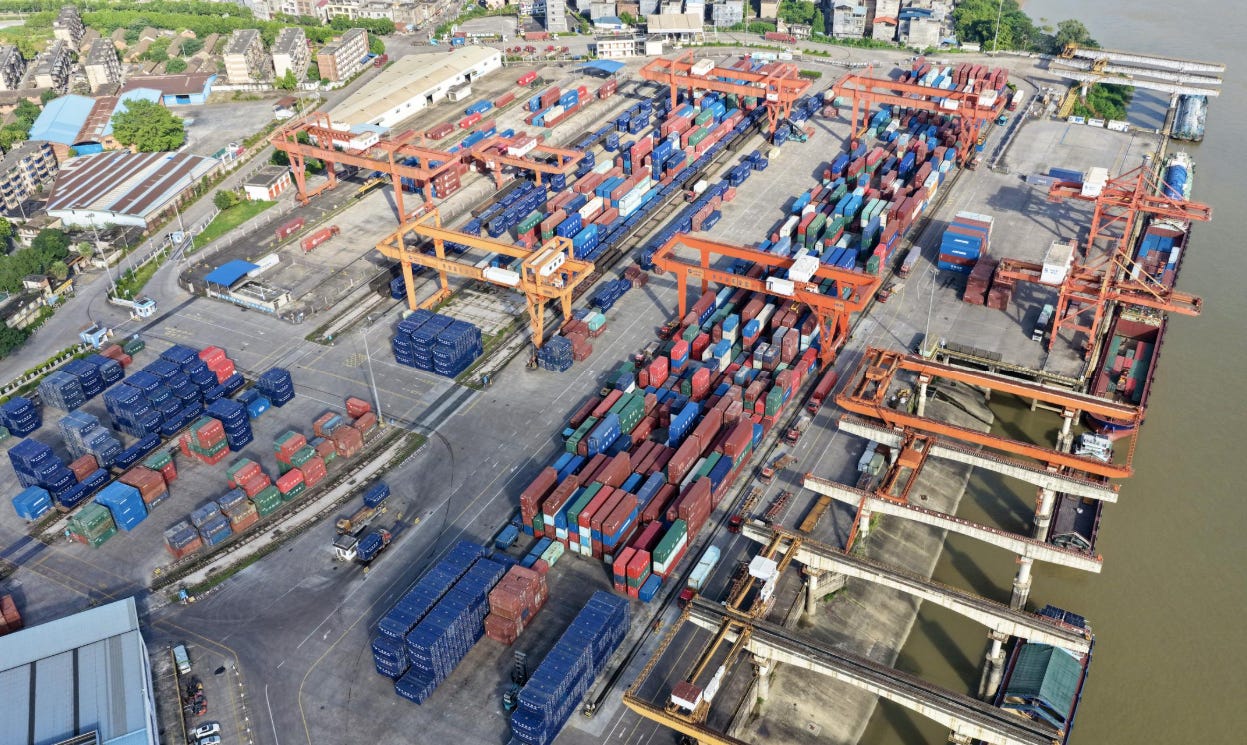
The next layer consists of logistical networks that convert digital coordination into physical movement. Ports, railways, trucking networks, warehouses, and distribution hubs form the circulation system of the modern economy. Their function is not simply transportation but synchronization. Goods move through these systems according to schedules that are tightly integrated with production processes and retail demand. The efficiency of this logistical layer is frequently interpreted as resilience. In practice it reflects precision. Precision requires continuous coordination with the computational layer beneath it.
Supply chains operate above logistics. Modern production rarely occurs within a single geographic region or institutional boundary. Components are manufactured in multiple locations and assembled through internationally distributed processes. The production of a single finished good may therefore depend upon dozens of specialized suppliers connected through logistical and computational systems. Supply chains transform raw materials into finished goods, but their operation depends upon the stable functioning of the layers beneath them.
At the top of the stack sits the financial system. Finance allocates capital, liquidity, and credit across the entire structure. Payment systems allow goods to move through supply chains. Credit markets finance production and inventory. Banking systems provide the settlement mechanisms that enable trade to occur at scale. The financial layer does not physically produce energy, transport goods, or assemble products, yet it governs the flow of resources across all the layers below it.
In the contemporary global economy, much of this financial coordination occurs through offshore dollar credit markets that operate beyond the formal boundaries of national banking systems, a structure explored in The Hidden Monetary System: How the Eurodollar Network Runs Global Finance. Through these mechanisms, liquidity can expand or contract across the entire infrastructure stack.
When each layer is examined independently, modern systems often appear robust. Energy grids incorporate redundancy. Data networks reroute traffic automatically. Logistics networks adjust routing in response to disruption. Financial markets continuously reprice risk. The presence of these stabilizing mechanisms encourages the perception that the system as a whole is resilient.
The difficulty lies in the relationship between the layers themselves. Modern infrastructure operates through tight coupling. Each layer depends upon the continuous functioning of the others. Energy sustains computation. Computation coordinates logistics. Logistics enables supply chains. Finance allocates resources across the entire structure. The dependency is not sequential but simultaneous. Each layer operates under the assumption that the others will continue functioning without interruption.
Under conditions of tight coupling, disturbances rarely remain isolated. A failure within one layer alters the operating conditions of the others. Energy interruptions disable computational systems. Computational failures interrupt logistics coordination. Logistical disruption slows supply chains. Financial shocks restrict the credit flows that sustain production. Because the layers depend upon each other continuously, disturbances move through the system in a cascading pattern.
The architecture of the stack was not designed to produce fragility. It emerged through decades of optimization directed toward efficiency. Industries reduced costs by eliminating inventory, accelerating production cycles, and integrating global supply networks. Just-in-time logistics replaced stockpiling. Digital coordination replaced manual scheduling. Financial integration expanded the availability of capital across borders. Each change improved performance within a particular domain.
The cumulative effect of these optimizations was tighter coupling across the entire infrastructure stack. Redundancy declined as synchronization increased. Systems that once operated with temporal buffers began to operate in near real time. The resulting structure is capable of extraordinary efficiency under stable conditions. At the same time, tight coupling alters the way disturbances behave within the system.
Most individuals experience modern infrastructure only through its outputs. Electricity appears reliably at the wall outlet. Goods arrive at stores or at the front door. Digital communication operates continuously. The architectural structure that makes these outcomes possible remains largely invisible. Yet beneath ordinary experience lies an integrated system of energy grids, communication networks, transportation corridors, industrial production systems, and financial clearing mechanisms.
Understanding the infrastructure stack changes how disruptions should be interpreted. Events that appear unrelated—energy shortages, shipping delays, financial volatility, or digital outages—often represent disturbances moving through the same layered structure. When observed in isolation, these disruptions may appear unexpected. When examined within the architecture of tightly coupled systems, they become more intelligible.
When disturbances propagate across tightly coupled systems, the effects are rarely experienced first at the institutional level. They appear first in the ordinary operations of daily life: interruptions in energy supply, shortages of essential goods, and financial instability that reaches households long before institutions fully absorb the disruption.
Modern civilization does not depend upon the stability of any single institution or sector. It depends upon the continuous operation of the entire stack. When disturbances propagate across the layers that hold the structure together, the effects rarely remain confined to the system in which they began. The architecture itself determines how widely those effects will travel.