

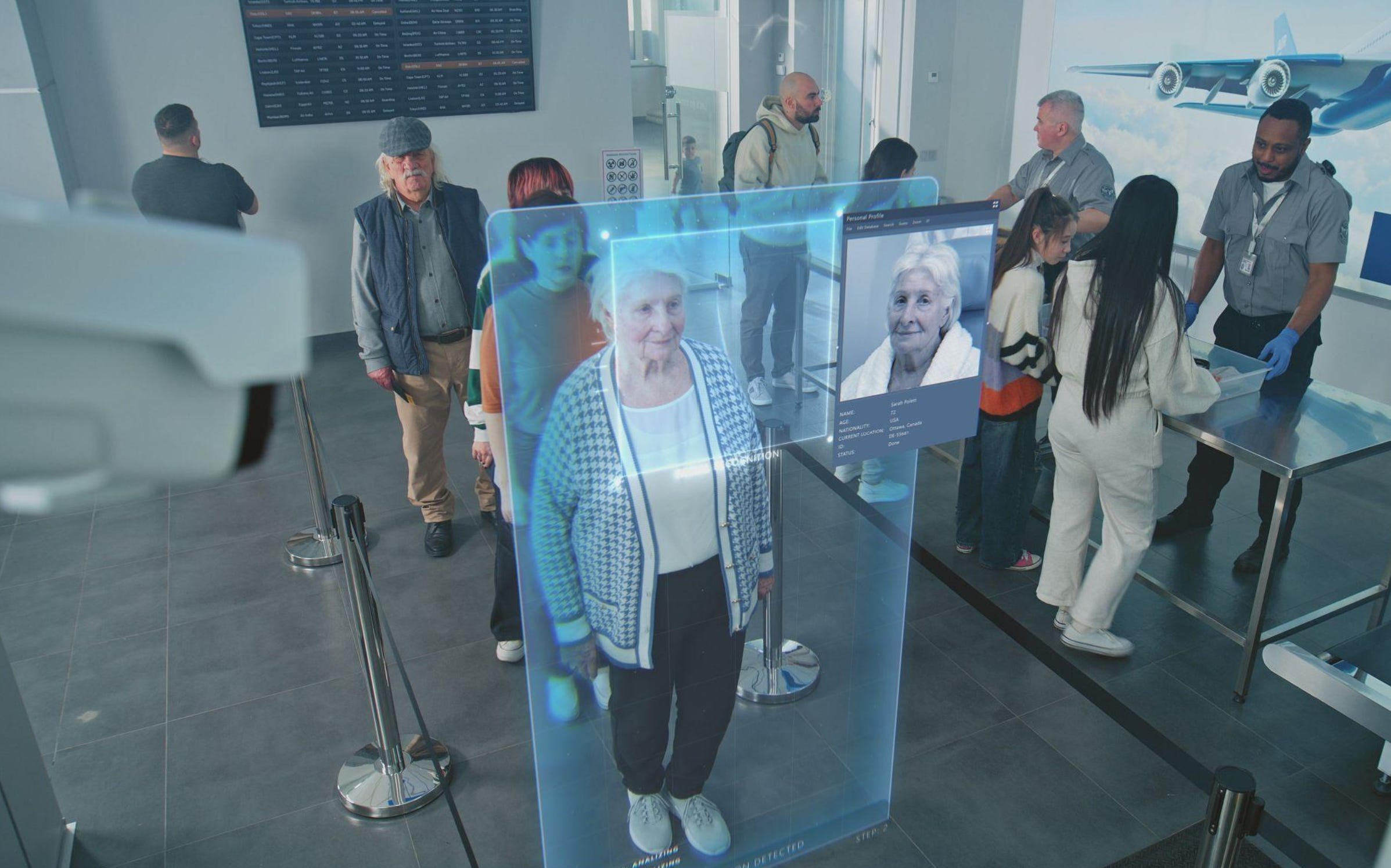
The modern airport does not merely move people. It conditions them.
The central figure is not the TSA officer, the gate agent, or the airline employee standing at a counter with a microphone and a line of tired passengers. They matter, but they are not the center of the structure. They occupy roles. They can be replaced. The more important figure is the passenger: irritated, alert, often aware that the process is excessive, yet still moving forward because refusal carries immediate personal cost.
That is why the Milgram experiment is the better frame. Stanley Milgram’s obedience studies at Yale in the early 1960s were not primarily studies of cruelty. Participants were instructed by an authority figure to administer what they believed were increasingly severe electric shocks to another person. Many continued well beyond the point at which they were visibly uncomfortable. The disturbing finding was not that ordinary people enjoyed harm. It was that ordinary people, placed inside a structured authority setting, often acted against their own discomfort because the situation made continuation feel required.
The American airport recreates a softer civilian version of that structure. The passenger is not asked to accept one dramatic indignity. He is moved through a sequence of small submissions, each presented as ordinary, necessary, and non-negotiable. Show the document. Remove the object. Place the bag. Raise the arms. Stand still. Wait. Move. Stop. Open the passport. Present the face. Board when called. Sit where assigned. Obey the light. Obey the tone. Obey the process.
Belief is unnecessary. Continuation is enough.
The system does not need to persuade the traveler that each instruction is proportionate. It only needs to make refusal costly and compliance ordinary. A passenger may know that much of the process is excessive. He may know that the tone is degrading. He may know that repeated checking has crossed from security into ritualized submission. But he also knows that argument can mean delay, scrutiny, missed connection, removal from the flight, or worse. So he continues.
In The American Air Traveler as Managed Threat, the central issue was what the airport system does to the passenger: it converts a paying customer into a managed risk object. The present issue is slightly different. It concerns what the system trains the passenger to become. The first essay examined degradation. This one examines learned submission.
The airport is an obedience laboratory disguised as a transport hub. Its commands are usually small, but their cumulative effect is large. The passenger learns that movement depends on authorization. Discomfort is not a valid objection. Dignity yields to procedure. Personal judgment has little standing once the system has spoken.
This is not simply about TSA. Airlines have absorbed the same logic. Gate agents issue commands with increasing sharpness. Boarding is divided into groups, zones, privileges, exceptions, penalties, and warnings. Carry-on bags become contested objects. Passengers are sorted by fare class, pressed into narrow seats, charged for formerly ordinary features, and then told to remain patient. The commercial language says customer. The operational language says subject.
The Stanford Prison experiment explains part of the atmosphere, but not the core mechanism. Staff placed into enforcement roles often begin to behave according to those roles. The airport gives them scripts, authority, pressure, and a captive queue. Some become curt. Some become hardened. Some hide behind policy. That role-conditioning helps explain the tone. But the airport does not depend on unusually harsh staff. It depends on ordinary passengers accepting repeated instruction from whoever happens to occupy the authority position that day.
That is why Milgram remains central. The passenger is the subject. The authority figures can change.
This does not mean passengers are weak. Most people comply because the situation is engineered to leave no practical alternative. A traveler usually cannot choose another checkpoint, another authority, another screening logic, or another boarding regime. He cannot negotiate the procedure. He cannot refuse facial comparison without drawing attention. He cannot insist on dignity as a condition of the transaction. He can submit or jeopardize the journey.
That is the hostage element of modern air travel. The passenger has paid, but once inside the system he has little leverage. He is dependent on institutions that owe him almost nothing in the moment. The ticket does not create equality. It creates exposure. The traveler has somewhere to be, people waiting, money spent, luggage committed, plans arranged. The system knows this. It does not need chains. It has dependency.
Discomfort is useful because it tests submission without announcing itself as a test. Long lines test patience. Confusing instructions test attentiveness. Repeated checks test obedience. Crowded cabins test tolerance. Shrinking space tests resignation. Facial recognition tests acceptance of biometric identity as a condition of movement. Each burden is explained separately. Together, they produce the same learned response.
Keep going.
The genius of the system is that each step appears too small to justify refusal. No single command seems worth confrontation. No single indignity seems sufficient to risk the flight. Shoes are removed, belts are placed in trays, liquids are surrendered, arms are raised, passports are opened, faces are scanned, bags are measured, seats are tightened, fees are paid. Each act is minor. The total structure is not.
Milgram’s subjects did not arrive intending to override conscience. They were moved there gradually. The increments mattered. Each step made the next step easier. The airport works the same way. It begins with routine. Routine becomes expectation. Expectation becomes compliance. Compliance becomes culture.
The most important feature of the airport is therefore not force. It is normalization. The passenger sees everyone else doing the same thing. The queue moves forward. The person ahead removes the shoes. The person behind waits silently. The family with children manages the stroller, the liquids, the bags, the documents, the stress. The business traveler performs the ritual with dead-eyed fluency. The elderly passenger submits to the scanner. The international traveler opens the passport. The crowd teaches itself what is expected.
This is where Humans Require Social Permission becomes directly relevant. People do not only take cues from formal authority. They take cues from the group. Silence is information. Compliance is information. The absence of objection becomes a signal that objection is unsafe, inappropriate, or futile. In the airport line, social permission runs toward submission. Everyone wants the line to move. Everyone wants the plane to board. Everyone wants the difficult person to stop being difficult.
Authority becomes distributed through the line itself. The passenger is not only obeying the officer. He is obeying the situation.
Refusal is not only a conflict with authority. It becomes a disruption of the queue, a burden on other passengers, a visible failure to cooperate. The system quietly recruits the crowd to discipline the individual. Obedience becomes courtesy. Resistance becomes selfishness.
That is the inversion. A person objecting to degradation is made to appear as the problem, while the degrading structure remains neutral. The passenger who questions the process becomes suspicious, inconsiderate, unstable, or naïve. The system itself is never named. It is simply security, policy, procedure, or how travel works now.
This is where the moral structure of the airport resembles Milgram most closely. The authority figure does not need to shout. The system does not need open violence. It relies on procedural language. Please step forward. Please wait. Please remove. Please comply. Please proceed. The words are bland. The consequences behind them are not. The passenger understands the implied threat without needing it stated.
The result is an environment in which millions of people practice obedience under mild coercion while still calling the experience normal. They may complain afterward. They may resent the process. They may joke about security theatre or airline misery. But during the process they comply, because compliance is the price of movement.
The deeper question is what this does to a population over time. Airports are not marginal spaces. They are among the most common places where ordinary people encounter the administrative state, biometric systems, corporate command, surveillance infrastructure, and permission-based movement in a single sequence. The traveler does not read about conditional participation. He experiences it with his body.
That connection is developed in Behavioral Scoring and Conditional Participation. Access to ordinary life is increasingly provisional, monitored, classified, and capable of withdrawal. Work, finance, housing, movement, and public participation are reorganized around legibility to systems that classify risk, trust, compliance, and acceptability. The airport is one of the clearest physical interfaces of that wider shift. It teaches the passenger that movement is not presumed. It is granted.
That experience matters. The body remembers being managed. The mind learns the sequence. The traveler becomes practiced at submitting to authority while retaining private disagreement. This is the modern civic posture in miniature: inward skepticism, outward obedience.
That is why the airport deserves more attention than it receives. It is usually dismissed as a miserable necessity, a cost of flying, an irritation to be endured. But misery can be formative. Repetition can train. A system that repeatedly requires people to override discomfort, suppress objection, and continue under authority is not merely inefficient. It is pedagogical.
The lesson is not stated, but it is clear. Your movement is conditional. Your body is inspectable. Your documents must be ready. Your face must match. Your belongings are suspect. Your time is disposable. Your dignity is secondary. Your objection is impractical. Your compliance is expected.
The structure does not require every actor to understand the whole. That is the point. Individual employees know their role. Agencies know their jurisdiction. Airlines know their procedures. Technology vendors know their systems. Each piece can appear narrow, practical, and defensible. Yet the whole still moves in one direction. Systems teach through arrangement, repetition, incentive, penalty, and role. The airport rewards obedience and punishes friction. The compliant passenger moves forward. The questioning passenger becomes the obstruction.
That is why the Milgram frame is useful. It shifts attention away from the personalities of officials and toward the structure that produces submission. The problem is not primarily the harsh officer or the rude gate agent, although both exist. The problem is the environment in which ordinary people repeatedly obey commands they experience as excessive because the alternative is too costly.
The American airport has become one of the clearest public demonstrations of that mechanism. It takes people who paid to travel and places them inside a sequence of authority, discomfort, observation, and dependency. It does not need them to agree. It only needs them to continue.
And they do.
That is the unsettling truth. The airport does not merely reveal that institutions command. It reveals how easily people adapt when authority is procedural, discomfort is incremental, and refusal threatens immediate personal loss. The passenger leaves angry, tired, and diminished, but he usually leaves having performed every step.
The system has taught its lesson.