

Dwight Eisenhower’s warning about the military-industrial complex is often remembered as a warning about profit, lobbying, and defense contracting. It was also a warning about institutional continuity. The danger was not only that war-making capacity would become economically entrenched. It was that a permanent defense structure would acquire enough administrative depth, political protection, and cultural deference to preserve large areas of state power beyond ordinary democratic correction. Once that condition exists, exposure does not necessarily produce control. It often produces adaptation. Programs are renamed, authorities are revised, oversight is ritualized, and the underlying structure remains in place.
That is the real significance of permanent national security architecture. Temporary wartime secrecy is one thing. A standing system of secrecy embedded across procurement, intelligence, research, contracting, classification, and congressional dependency is another. In that environment, secrecy is not an exception attached to a few unusual operations. It becomes an operating condition of power itself. Public institutions continue to exist, hearings continue to occur, and formal oversight continues to be described as active, but whole domains of program continuity are insulated by compartmentation, classification, budgetary opacity, and the claim that exposure would itself endanger the nation. What survives is not merely information control. It is decision-making continuity under conditions where outsiders can observe effects without reliably controlling causes. This is why the problem is best understood as structural rather than scandal-based. The core issue is not that some secret program once escaped supervision. It is that defense systems are built to preserve mission continuity, and that continuity repeatedly outruns correction.
The record is clear that this is not a speculative concern. The Church Committee documented extensive abuses by U.S. intelligence agencies, including covert action against domestic political targets, illegal surveillance, mail opening, infiltration, and operations that treated constitutional limits as obstacles rather than boundaries. Those revelations were historically important, but their deeper significance lay in what they showed about institutional behavior. Secret agencies given wide operational latitude, weak external visibility, and broad claims of necessity do not naturally contract back to a narrow defensive role. They expand, protect themselves, and redefine accountability as a managed internal process. The Committee’s work mattered because it exposed not only particular abuses, but a repeatable pattern: secrecy plus mission elasticity plus weak correction produces durable insulation from normal control.
This is where Classification and the Limits of Public Accountability becomes directly relevant. That essay argues that secrecy can have legitimate uses, but that classification also functions as a structural shield for actions the state could not publicly defend. That is the deeper problem here. Classification does not merely withhold information from the public in the abstract. It changes the accountability environment in which programs operate. It narrows who can know, who can challenge, what can be tested, and how far corrective pressure can reach. Once those boundaries are in place, public oversight is forced to work downstream of a prior insulation mechanism. The state is not simply keeping secrets. It is preserving operational latitude by controlling the conditions under which judgment itself can occur.
The same point appears in the history of MKULTRA. The issue is not merely that the CIA sponsored deeply abusive behavioral experiments. It is that programs of this kind could exist within the national security state at all, carried forward through compartmented authority, hidden funding channels, and the assumption that classified purpose could displace ordinary moral and legal limits. Later exposure did not reveal a system failing accidentally. It revealed a system in which secrecy had already become strong enough to carry serious human harm behind administrative walls. That is the meaning of the example. When an institution can conceal conduct of that severity for years, the preservation problem is already present. Exposure comes late, after the structure has already demonstrated that internal permission outranked external accountability.
This is also why public scrutiny so often disappoints. Exposure is commonly treated as if it were the same thing as control. It is not. Exposure may damage legitimacy, but legitimacy damage alone does not necessarily dismantle a protected system. In mature defense and intelligence structures, scrutiny is often metabolized rather than obeyed. A hearing can narrow one authority while legitimizing another. A scandal can produce paperwork, new terminology, and revised compliance channels without reducing the underlying concentration of power. A disclosure can even strengthen the system by allowing it to reorganize under a more durable legal theory. The architecture learns. It does not simply collapse because the public notices it.
That dynamic is developed more fully in Truth That Changes Nothing. The argument there is not that institutions reject truth outright. It is that they are often structured to absorb truth when it threatens stability. Truth enters the record, procedural response follows, committees form, policies are revised, oversight is clarified, and yet structural risk rarely transfers upward. Authority remains intact. Continuity is preserved. That is precisely the public experience at issue here. Reports are published, hearings are held, audits identify failures, headlines flare, and then the system settles back into equilibrium. The problem is not that the truth never appears. It is that the surrounding architecture determines whether truth produces correction or merely documentation.
The post-9/11 surveillance record illustrates this well. The NSA bulk telephony metadata program became publicly notorious after the Snowden disclosures, and later official reviews made clear that the government had in fact been collecting domestic telephone metadata in bulk under Section 215. Yet the larger lesson was not only that one controversial program existed. It was that a vast surveillance apparatus could be built, normalized, defended through secret legal process, and only partially understood by the public after years of operation. Even after reform, the broader surveillance architecture remained extensive, and debate shifted toward calibration rather than rollback. The system absorbed the shock, shed some legal form, and preserved the larger logic of continuity under secrecy.
The procurement side reveals the same structure in a different register. The military-industrial complex is often discussed as if contracting inefficiency were mainly a fiscal problem. It is more than that. Large defense programs create constituency webs: contractors, subcontractors, congressional districts, military branches, committees, consultants, revolving-door personnel, and regional employment dependence. Once a program reaches sufficient scale, it no longer survives only because it performs well. It survives because too many institutional actors are invested in its continuation. The F-35 illustrates the point. Official reviews have repeatedly described cost growth, sustainment burdens, availability shortfalls, and modernization delays, yet the program persists because it has become structurally embedded across services, allies, budgets, and industrial networks. At that point, scrutiny does not function as a true off-switch. It functions as pressure for managed improvement inside a program whose continuation is largely assumed.
This connects naturally to War and Budgetary Expansion. That essay argues that modern conflict often fails in the language used to justify it while succeeding in the structures that surround it. A war may not produce peace or strategic closure, yet still produce appropriations, replenishment cycles, industrial contracts, permanent readiness claims, and a wider atmosphere of necessity. The war can fail publicly and still succeed institutionally. That logic belongs here because the military-industrial complex is not preserved by secrecy alone. It is preserved by budgets, contracts, dependencies, and the political difficulty of reversing institutional expansion once it has been justified in the language of security. The same event that exposes failure often widens the financial and administrative base of the system that failed.
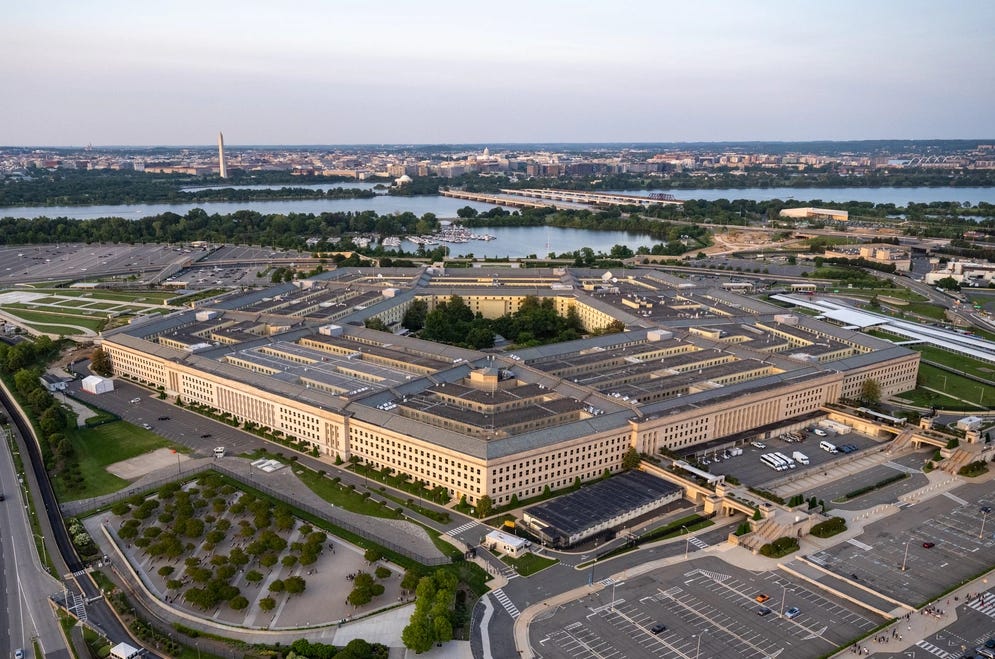
The Pentagon’s audit failures point in the same direction. A department responsible for immense resources has still not achieved a clean department-wide audit opinion, despite years of formal audit activity and repeated statements about progress. That does not mean nothing improves internally. It means something more important structurally: the institution remains powerful enough to continue operating at full strategic scale despite unresolved deficiencies in financial visibility that would be intolerable in less protected domains. In ordinary public administration, persistent inability to account clearly for assets would trigger far more serious political consequences. In the defense sphere, it becomes part of the landscape. This is not because accounting does not matter. It is because the strategic prestige, institutional centrality, and political protection of the defense apparatus are strong enough to prevent normal forms of correction from biting at their usual depth.
The most careful way to understand this is through system logic rather than through claims about a single hidden command. As set out in Strategic Intent Analysis: Inferring Direction Through Structural Convergence, institutions do not need unified conspiracy in order to produce durable directional outcomes. Systems can behave strategically through aligned incentives, institutional self-preservation, narrative canalization, and lock-in. That is the right frame here. The essay does not require the claim that every actor shares the same private intention. It requires only the more modest and better-supported conclusion that the structure repeatedly preserves secrecy, authority, and continuity in the same direction after exposure.
What links these examples, then, is not a single motive and not a claim that every participant understands the whole. The better explanation is systemic function. Defense institutions are rewarded for continuity, survivability, and mission preservation under uncertainty. Contractors are rewarded for program duration and renewal. Legislators are rewarded for protecting local economic flows and appearing strong on security. Oversight bodies often face information asymmetry, classification barriers, and political incentives that discourage direct confrontation with the security state. Under those conditions, secrecy is preserved not only because someone wishes to hide embarrassment, but because the whole structure is biased toward retention of authority. The system protects itself by design features that often appear reasonable in isolation and become insulating in combination.
That is why this subject should not be reduced to the simple idea of corruption, though corruption may be present. A deeper pattern is at work. Permanent defense systems accumulate their own theory of necessity. Once that happens, program survival becomes easier to justify than program termination, secrecy becomes easier to defend than openness, and procedural oversight becomes easier to perform than substantive control. This is how power can remain formally supervised while functionally insulated. The public sees committees, reports, inspectors general, compliance regimes, and reform language. What it often does not see is that oversight may be operating downstream of a deeper premise: that the strategic core must remain intact, and that correction must therefore stop short of genuine disruption.
This is also why secrecy outlasts scandal. The issue is not simply that officials hide information. It is that secrecy sits inside a larger architecture of dependence. Universities receive defense research money. Firms depend on classified contracts. Careers are built inside systems where clearance itself becomes a gatekeeping mechanism. Former officials circulate into industry and back again. Congress is asked to supervise institutions it also funds, praises, and relies upon. Under such conditions, secrecy is not held in place by darkness alone. It is held in place by a web of incentives, prestige, fear, habit, and administrative compartmentation. That makes it much more durable than the popular image of a hidden file cabinet or a few rogue operations suggests.
The resulting public experience is familiar. A citizen encounters revelations, investigations, declassifications, or cost scandals and assumes that democratic systems will now impose correction. Yet the visible result is often narrower: reputational disturbance without structural reversal, exposure without accountability, disclosure without meaningful loss of institutional power. That pattern is not incidental. It follows from the fact that a permanent military-industrial order is not merely a set of programs. It is a self-preserving environment. It can absorb criticism, concede fragments, and continue forward because its deepest function is continuity under challenge.
That is the real meaning of Eisenhower’s warning. The danger was never just that industry would influence war policy, though that was part of it. The deeper danger was that a permanent defense structure would become normal enough, prestigious enough, and opaque enough to preserve large zones of power beyond effective public reach. Once that stage is reached, secrecy does not survive because no one has noticed it. It survives because the system has become strong enough to continue even after being noticed.