

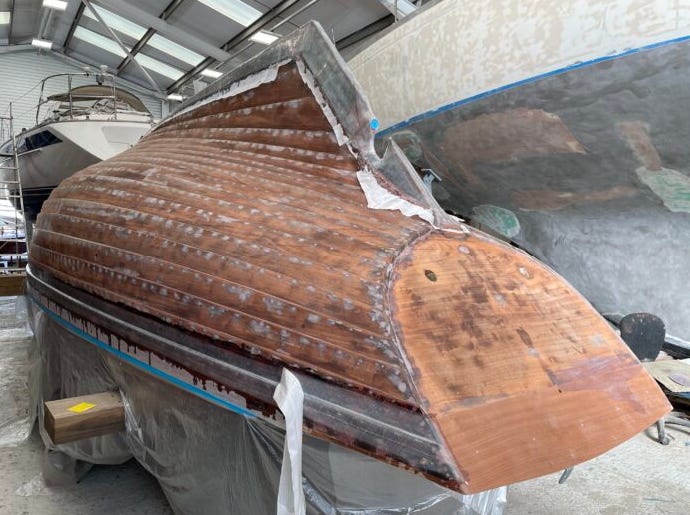
The Ship of Theseus is commonly presented as a philosophical puzzle. A vessel is repaired over time, each plank replaced as it wears. When no original material remains, the question is asked: is it still the same ship? The problem is usually treated as a question of identity, a paradox intended to expose the instability of continuity under material change.
The puzzle is framed as if identity were a property of substance. If the material changes, identity must either dissolve or be artificially preserved by naming convention. The paradox appears because the framing assumes that what a thing is resides in what it is made of.
Observation suggests otherwise.
Every living system replaces itself continuously. Cells die and are renewed. Molecules circulate. Tissue reorganizes. Within a few years, most of the physical matter in the human body has changed. Yet the organism persists as a coherent entity. No paradox arises because identity is not experienced as material continuity. It is experienced as structural continuity.
The same pattern holds across scale. A river is never composed of the same water, yet it remains the same river. As was observed long ago, one cannot step into the same river twice. The water has changed, yet the river remains, because the structure that channels flow persists.
A forest renews itself through growth and decay, yet its form and function endure. An institution changes personnel, policy, and procedure, yet its character often remains recognizable. Material turnover is constant. Structural persistence is what endures.
The Ship of Theseus is therefore not a paradox. It is an illustration of a general principle: identity resides in organization, not in components.
Structure is the pattern of relationships that holds a system together. Form, constraint, and function define the system more fundamentally than the matter temporarily occupying that pattern. When replacement occurs within the existing structure, continuity is preserved. When the structure changes, identity changes, even if the material remains.
Natural law operates through constraint rather than designation. Systems persist only when their organization distributes load, energy, and information within tolerable limits. Replacement that occurs outside those limits does not preserve the system. Coherence depends on alignment with structural reality, not on the continuity of materials or the retention of a name.
A bridge illustrates this clearly. Over decades, beams are replaced, surfaces repaired, and components renewed. As long as the load paths and structural geometry are preserved, the bridge remains the same structure. When those relationships fail, collapse occurs regardless of how much original material remains.
This resolves the traditional extension of the puzzle. If the removed planks are reassembled into a second ship, which vessel is the original? The question assumes that identity follows material history. In structural terms, the answer is different. The ship that maintained continuous structural operation retains its identity. The reconstructed vessel is a replica assembled from old components but lacking continuity of organization.
Continuity of structure is what carries identity through time.
This principle clarifies phenomena that otherwise appear ambiguous. Organizations survive leadership changes because their decision structures persist. Legal systems remain recognizable across generations because procedural architecture endures. Cultural identities persist despite demographic turnover when patterns of transmission remain intact.
Modern systems often treat identity as administrative continuity. A name, charter, ownership structure, or asset base is assumed to define the entity. Natural law applies a different test. When decision logic changes, incentives invert, or information flow becomes distorted, the organization has already become something else, regardless of its formal continuity.
Where structure holds, identity holds. Where structure fractures, identity dissolves, regardless of how much original material remains.
This is not a matter of interpretation. Systems that lose structural coherence cease to function. Bodies enter disease. Organizations enter paralysis or corruption. Ecologies collapse. Natural law does not preserve identity by recognition or intention. It preserves only what continues to operate within constraint.
The principle also explains failure. A body may retain its material integrity yet lose functional organization. An institution may preserve its name, buildings, and personnel while its decision logic changes completely. In such cases, continuity of matter or label masks structural replacement. The system appears the same while operating as something different.
The Ship of Theseus therefore illustrates a distinction between appearance and structure. Material continuity creates the appearance of sameness. Structural continuity creates the reality of sameness.
The deeper implication concerns time. Systems do not persist by resisting change. They persist by replacing components while preserving form. Stability is not stasis. Stability is regulated renewal within constraint.
Living systems demonstrate this most clearly. Health depends on continuous repair, replacement, and adaptation guided by an underlying organizational pattern. When renewal stops, decay begins. When replacement occurs without structural regulation, disorder appears. Identity depends not on resisting change but on maintaining coherence through change.
The paradox dissolves once identity is understood as a property of pattern rather than substance.
Seen this way, the Ship of Theseus describes not a philosophical problem but a universal condition. Every enduring system is a Ship of Theseus. Persistence requires turnover. Continuity requires structure. Coherence is what carries identity forward while matter passes through.
The question is therefore not whether a system’s material has changed. That change is inevitable.
The question is whether its structure still holds within the constraints of reality. If the pattern continues to distribute load, regulate renewal, and maintain functional coherence, identity persists. If those functions fail, the system has already changed, whatever name or material it retains.