

This essay is part of the Strategic Intent Analysis archive at strategicintentanalysis.com. The method is simple: begin with what is observable, then test the story against the structure beneath it.
A lawful economy assumes tomorrow.
It assumes that debts must be answered. It assumes that children will inherit the consequences of adult decisions. It assumes that bridges, ports, roads, power lines, farms, machines, skills, families, and currencies must be maintained because they carry life forward. It does not treat the future as a line item. It treats the future as a duty.
Modern economic language conceals this. It speaks of growth, credit, markets, prices, employment, productivity, deficits, and consumption. Those words matter, but they are not the economy itself. The economy is land, water, food, energy, labor, tools, transport, housing, household formation, law, trust, skill, and production. It is the order that lets ordinary life continue.
A society either preserves those foundations or consumes them.
The United States has stopped treating ordinary continuity as its governing horizon.
Officials do not say this. They speak constantly of resilience, recovery, investment, innovation, opportunity, and long-term strength. Public language still points toward the future. Public behavior does not. The structure behaves as though tomorrow can be borrowed against, inflated, hollowed out, leveraged, and consumed because ordinary accountability will not arrive in ordinary form.
That is the terminal horizon economy.
It is not merely an economy with too much debt. Debt is the first hard sign, but not the whole condition. A terminal horizon economy is a system whose managers continue speaking the language of stewardship while acting as though stewardship is no longer the controlling constraint. The future is no longer treated as inheritance. It becomes collateral.
As argued in Debt Without Exit, permanent borrowing eventually stops being an emergency bridge between revenue and expenditure. It becomes a continuity device. It keeps the state operating, absorbs political pressure, postpones conflict, and delays public recognition that promises and resources have drifted out of proportion.
Debt once financed war, crisis, infrastructure, or temporary imbalance. It was attached to an event or purpose. It could be argued about, repaid, refinanced, or reduced. Once debt supports the operating assumptions of the system itself, it changes character. It no longer funds the future. It consumes the future to preserve the present.
The American structure now depends on that consumption. Debt service, entitlements, military commitments, administrative overhead, industrial subsidies, emergency backstops, and crisis precedents all accumulate in one direction. Each can be defended alone. Together they form a fiscal machine in which restraint breaks something the system now needs.
The official numbers already show the shape of the trap. In its 2026 budget outlook, the Congressional Budget Office projected a federal deficit of $1.9 trillion for fiscal year 2026, rising to $3.1 trillion by 2036. It also projected debt held by the public rising from 101 percent of GDP in 2026 to 120 percent in 2036, above the prior postwar record. Those figures do not prove the whole thesis by themselves. They anchor the fiscal side of the pattern.
A household cannot live this way for long. A farm cannot. A real business cannot defer maintenance forever, borrow against future income forever, neglect its tools forever, exhaust its workers forever, and call the result success because accounting language still functions. Reality eventually returns. The roof leaks. The equipment fails. The soil weakens. The workers leave. The note comes due. The children inherit the mess.
Nations can postpone this longer because they control currency, taxation, law, regulation, statistics, public finance, military force, and official narrative. They can move consequence around. They can bury it in inflation, asset prices, subsidies, emergency programs, public debt, monetary intervention, and administrative language. They can call deterioration growth if the measures are arranged properly.
They cannot abolish consequence.
Delay has become the model.
This is why official economic explanation now feels so detached from ordinary life. Citizens are told the economy is strong while housing becomes unreachable, insurance becomes punishing, food and fuel strain households, vehicle repairs become major events, medical costs remain frightening, education requires debt, and family formation becomes financially remote. The numbers may still say growth. The household knows something else.
The economy can expand in nominal form while becoming harder to live inside.
The contradiction is also a signal problem.
The Liquidity Illusion explains the financial version. Markets are treated as real-time indicators of systemic health. Rising equity indices signal confidence. Tight credit spreads suggest stability. Higher asset prices are taken as proof that institutions are functioning. But in a liquidity-dominant system, rising prices may not mean that underlying conditions have improved. They may mean that correction has been contained.
When stress appears, central banks expand balance sheets, facilities absorb risk, support is signaled, and liquidity becomes insulation. Asset prices recover. Volatility falls. Credit markets reopen. Institutions continue operating. To observers, this looks like resilience. Often it is only postponement. Exposure has been extended, refinanced, or moved into channels less visible to the public.
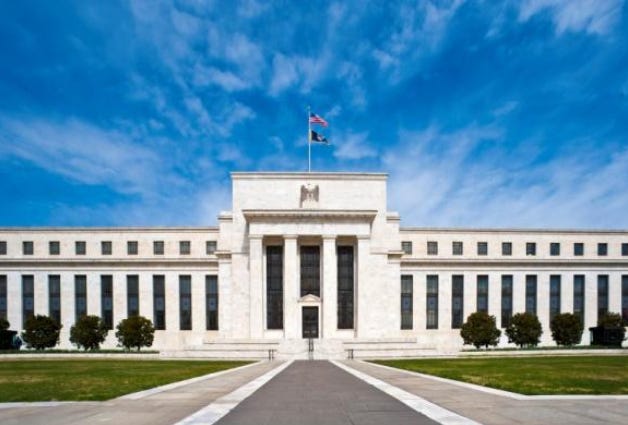
The Federal Reserve balance sheet gives the pattern a hard point of contact. After the pandemic expansion, the Fed reported its balance sheet at about $9 trillion, or 36 percent of U.S. nominal GDP, from February through May 2022. By June 17, 2026, total Federal Reserve assets had fallen to about $6.74 trillion. That reduction matters; it shows a real unwind from the peak. But quantitative tightening did not return the system to anything resembling its pre-2008 scale. The crisis layer partly receded, but it remained incorporated into the monetary architecture.
In a coherent system, stress produces feedback. Loss reveals misallocation. Insolvency forces restructuring. Price declines discipline excess. Pain is information. It tells the system where reality has been violated. When liquidity repeatedly suppresses that feedback, the market no longer reports only underlying strength. It also reports the expected probability of rescue.
Markets can therefore rise while the real economy weakens.
That is the condition Americans now inhabit. Retirement accounts may rise while rent eats wages. Asset values may rise while young households lose the path to ownership. Financial indices may rise while infrastructure ages, insurance hardens, food systems become more fragile, and productive work loses ground to claims on productive work. The visible financial layer can look calm while the lived substrate becomes more strained.
This is not ordinary prosperity. It is a managed surface.
The terminal horizon economy depends on that surface. It needs asset prices to signal confidence even when ordinary life signals deterioration. It needs debt markets to remain open even when repayment discipline has weakened. It needs public language to preserve belief while costs are shifted forward. It needs people to confuse continuity with resolution.
Continuity is not resolution.
A system may keep paying salaries, rolling debt, supporting markets, funding programs, expanding credit, and performing the rituals of confidence while losing the capacity for genuine correction. It remains operational but less honest. Large but less grounded. Busy but less lawful.
The economic problem is also an inversion problem.
In The Corruption of Order, the central pattern is that institutions may retain their outward form after their rightful purpose has weakened or changed. Law can preserve procedure while losing justice. Government can preserve administration while losing limits. Medicine can preserve intervention while losing healing. Education can preserve credentialing while losing formation. Finance can preserve circulation while losing stewardship.
That last inversion is decisive.
Finance is meant to steward value across time and facilitate real exchange. It should serve production, saving, investment, household stability, and lawful continuity. In the terminal horizon economy, the relation reverses. Production serves finance. Households serve credit structures. Public budgets serve debt markets. Policy serves asset prices. Real things — land, labor, energy, tools, housing, food, skill — are made subordinate to claims upon them.
The shell remains. The animating principle weakens.
The country still has markets, banks, agencies, fiscal frameworks, monetary authorities, budget processes, infrastructure programs, and official economic reports. The vocabulary remains familiar. The governing end has shifted. The visible form says stewardship. The practical operation says extraction.
This is why “bad policy” is too small a description. Bad policy assumes error inside a still-correct purpose. The terminal horizon economy suggests something deeper: the purpose has drifted. The system no longer behaves as though its first duty is to preserve the conditions under which ordinary families, communities, and productive life can continue. It behaves as though its first duty is to preserve system operation, financial confidence, and institutional continuity, even if the public future is weakened in the process.
A lawful economy asks what must endure.
A terminal horizon economy asks what can be carried until the next intervention.
Crisis then becomes permanent. Each failure justifies another emergency measure. Each emergency measure expands the authority of the institutions that failed to preserve the prior order. Each rescue weakens the discipline that would have forced correction. Each delay makes honest repair more painful. The system survives by becoming less capable of living without support.
Production cannot be replaced by monetary claims. Energy cannot be replaced by policy language. Food cannot be replaced by financial instruments. Trust cannot be printed. Family formation cannot be restored by slogans. Infrastructure cannot be maintained by announcements. A nation cannot outsource its material base, inflate its claims, degrade its households, and expect continuity because officials continue speaking in the language of growth.
The deeper mistake is the belief that symbols can permanently command reality.
Paper commands goods only while goods exist and people still trust the paper. Credit pulls value forward only while future value remains capable of being produced. Markets price claims only while claims retain some relation to underlying life. Once that relation weakens too far, the symbolic system may continue moving, but the movements become less meaningful. Prices rise. Measures distort. Signals fail. Trust drains away.
A terminal horizon economy may still look powerful. It may look most powerful near the end of coherence. It announces large programs. It issues confident forecasts. It celebrates innovation. It expands enforcement. It promises transformation. It treats doubt as ignorance or extremism. Beneath the language, the structure keeps narrowing. More debt is required to sustain less stability. More intervention is required to prevent more failure. More explanation is required to conceal more contradiction.
The turning of the age is not merely background to this argument.
In The Turning of the Age, the older view of time is not presented as superstition or metaphor. It is a structure of recurrence, correction, and renewal. The age-cycle reviews civilization. It tests whether accumulated order still corresponds to truth, proportion, boundary, and lawful relation. An age does not end humanity. It tests order. It reveals what was built in alignment and what was built against the structure of the world.
A terminal horizon economy is not merely a fiscal condition. It is evidence of an order no longer behaving as though ordinary continuity is its first duty. The economy consumes tomorrow because the governing structure no longer appears to trust tomorrow in ordinary form.
Strategic Intent Analysis does not wait for confession. Power rarely announces the meaning of its own direction. It produces budgets, forecasts, emergency authorities, continuity plans, facilities, programs, and explanations. Official statements are evidence, not verdicts. Truth is read through pattern, convergence, repeated conduct, structural incentive, and the failure of weaker explanations.
The question is not whether officials admit they are consuming public continuity while preparing protected continuity. They will not. The question is whether the observable signals cohere.
They do. Debt becomes permanent. Liquidity suppresses correction. Finance preserves its outer form while losing stewardship. Public households become more fragile. Continuity of Government and private refuge architecture point toward preparation for interruption. Taken together, these are not identical facts, but they are matching signals.
That is why The Bunker and the Turning of the Age matters here without needing to be repeated. That essay examined the continuity side of the evidence: protected command, hardened sites, private refuge, independent supply, controlled access, emergency authority, and preparation for interruption. This essay examines the economic side of the same field. The public economy is being run down while protected continuity is being built up.
If a system truly believed in long public continuity, it would protect the conditions of public continuity. It would maintain productive capacity, preserve energy reliability, protect household formation, repair infrastructure, limit debt, reward saving, sustain local resilience, and keep finance subordinate to real life.
When it extracts from those foundations while preparing protected continuity elsewhere, the question changes.
The question is no longer only why the economy is being mismanaged.
The question becomes what kind of future is being prepared for.
Preparation itself is not the indictment. A household that stores food, protects water, keeps tools, and preserves local resilience is acting coherently. The indictment is asymmetry.
The public is told to trust continuity while governing systems prepare for interruption.
That same asymmetry appears in the economy. Public continuity is weakened while protected continuity is strengthened. Ordinary households become more dependent on credit, pricing systems, centralized infrastructure, digital access, employment fragility, and administrative permission. Meanwhile, the state and aligned financial structures become more capable of directing access, allocating scarcity, preserving command, and surviving rupture.
The economy becomes part of the continuity architecture.
Public debt expands. Public purchasing power weakens. Productive capacity thins. Infrastructure ages. Food, fuel, water, communications, and payment systems become more centralized and more vulnerable. Households become more dependent on credit and less able to absorb shock. Local resilience weakens. At the same time, command systems become more hardened, financial systems become more protected, and emergency authority becomes easier to justify.
Visible stewardship declines. Protected continuity advances.
The structure needs no announcement. It requires no single meeting, plan, or confession. It is visible in conduct. A civilization that believes in tomorrow repairs the bridge, protects the soil, trains the young, preserves the currency, maintains tools, honors work, limits debt, and keeps authority close to consequence. A system operating through a terminal horizon extracts, leverages, inflates, centralizes, consumes, manages perception, and prepares privately.
The difference is moral before it is technical.
An economy governs what a society preserves, what it sacrifices, what it rewards, and what it makes possible for the next generation. If the economy rewards claims over production, leverage over stewardship, extraction over repair, consumption over inheritance, and administrative continuity over household stability, the disorder is not confined to finance. It has entered the relation between generations.
Debt places a claim on people not yet fully represented. Inflation taxes people who did not meaningfully consent to it. Asset inflation rewards those already inside ownership while raising the entry cost for those outside it. Infrastructure neglect transfers repair costs forward. Offshoring production transfers dependency into the national base. Energy fragility transfers vulnerability into every household and industry.
Each decision may appear manageable alone. Together they describe a civilization consuming the conditions of its own continuity.
The phrase “as if there is no tomorrow” is not rhetorical excess. It names a structural assumption.
A normal economy can make mistakes and remain oriented toward repair. A terminal horizon economy treats repair as too costly, correction as too destabilizing, and honesty as too dangerous. It prefers extension, refinancing, dilution, subsidy, control, narrative, and emergency. It does not solve contradiction. It carries contradiction forward.
Natural law eventually exposes this.
Reality is not persuaded by fiscal language. The bridge either holds or it does not. The currency either preserves trust or it does not. The energy system either delivers power or it does not. The household either forms or it does not. The worker either lives with dignity or he does not. The road, the port, the transformer, the farm, the machine shop, the water system, and the family do not become stable because a model says the economy is strong.
They are the economy.
When they weaken while claims multiply, the country is not becoming richer in any meaningful sense. It is becoming more leveraged against what remains.
The economic evidence does not require the reader to accept the whole age-transition structure in advance. Strategic Intent Analysis begins lower to the ground. It asks whether the observable pattern is coherent, whether the signals converge, and whether ordinary explanations are strong enough to account for the direction of travel.
Here, the pattern is sufficient. The United States spends beyond ordinary restraint. It borrows beyond plausible political correction. It protects financial signals. It weakens household continuity. It neglects productive foundations. It prepares protected continuity while ordinary resilience declines. It speaks of tomorrow while consuming tomorrow.
The terminal horizon economy is not the end of life. It is the end of a particular economic fiction: that a nation can preserve prosperity by multiplying claims while weakening the real conditions that make those claims meaningful.
Correction can still occur wherever truth returns to structure. A household can reduce dependency. A community can restore local production. Land can be tended. Tools can be maintained. Food, water, energy, shelter, and skill can be made more resilient. Real wealth can be distinguished from paper exposure. These are not nostalgic gestures. They are acts of alignment.
At the national level, the pattern is now clear enough to name. The economy is being managed against the public future. It is being operated through a terminal horizon: long enough to preserve the appearance of continuity, short enough to evade the obligations that true continuity would impose.
A civilization that believes in tomorrow builds.
A system that expects discontinuity extracts.
That is the difference now visible. The language of the American economy still speaks of tomorrow. The structure increasingly spends as if tomorrow no longer matters.