

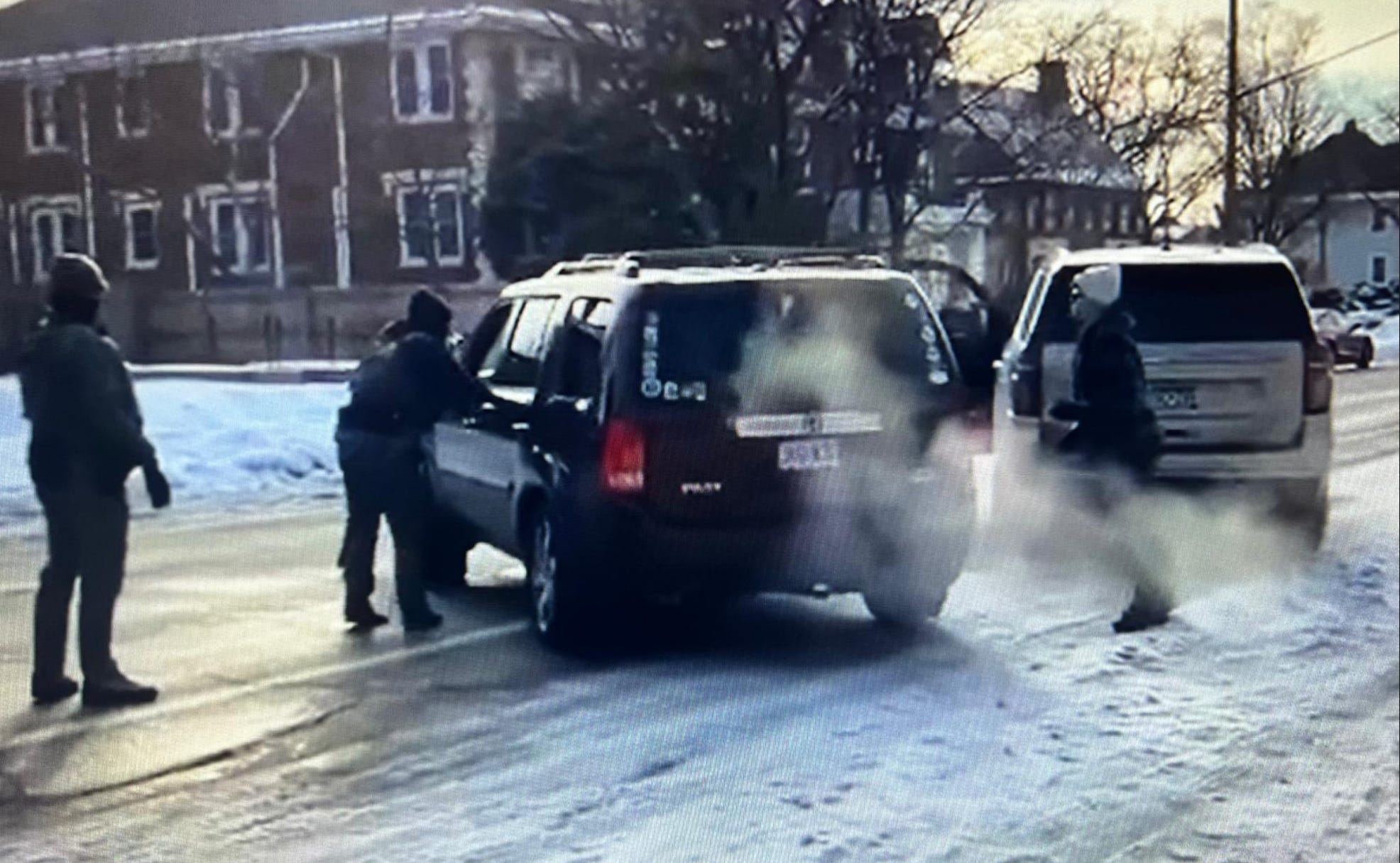
On January 7, a woman was shot and killed in Minneapolis during an operation conducted by agents of U.S. Immigration and Customs Enforcement. Officials described the shooting as self-defense. Video emerged almost immediately. I watched it. What I saw was not a tragic misunderstanding. What I saw was a woman in a vehicle attempting to leave an encounter, and an agent who killed her anyway.
This is not an emotional reaction. It is a legal and moral judgment. If the video shows what it appears to show—if she was not driving into anyone, not presenting an imminent threat, not about to seriously injure or kill another human being—then the killing was not lawful. And when lethal force is used without legal justification, it is not an accident. It is not an “incident.” It is a killing.
There is no softer word for it.
What makes this case even more stark is what we now know about who she was. She was not a random bystander. She was a legal observer associated with a group that had been monitoring and interfering with ICE activity. That fact eliminates confusion on both sides. She could not reasonably claim she did not know these were federal agents. But it also means they knew exactly who she was: a U.S. citizen, acting in a political and observational capacity, not as an immigration target and not as someone within their jurisdiction.
That mutual recognition matters. This was not a chaotic encounter between strangers. It was an interaction between two parties who understood the roles each was playing. If she had been obstructing, if she had been difficult all day, if she disobeyed their commands, if she attempted to leave in a way they did not want, none of that authorizes killing. Interference is not a capital offense. Protest is not a capital offense. Attempting to leave an encounter with federal agents who have no authority over you is not a capital offense. In this country, a citizen does not retain the right to live only so long as they are compliant.
ICE is not a general police force. Its authority is limited to immigration enforcement and to certain federal crimes connected to that function. A U.S. citizen who is not suspected of an immigration offense is not automatically subject to ICE authority in the way one would be to local police during a lawful stop. Jurisdiction is not created by weapons, uniforms, or command presence. It is created by law. If an agency has no lawful authority over a person in a given context, its orders do not carry the force of law. A citizen is not required to submit to an unlawful detention simply because armed agents demand it.
That principle is not radical. It is the architecture of the rule of law.
In ordinary life, people comply with law enforcement because authority is visible, identifiable, and accountable. Marked vehicles, badges, dispatch records, body cameras, and clear identification are not ceremony. They are how lawful power distinguishes itself from coercion. When agents operate from unmarked vehicles, wearing face coverings, with unclear or disputed identification, the legal context changes. A reasonable person cannot be expected to instantly determine whether they are facing lawful authority acting within its jurisdiction or something else entirely. Leaving such an encounter is not criminal by itself. It is, in many circumstances, the only rational response.
The constitutional standard governing lethal force is not ambiguous. For decades, the Supreme Court has held that deadly force is justified only when an officer has probable cause to believe a person poses an immediate threat of death or serious bodily harm to the officer or to others. Disobeying instructions does not meet that standard. Obstructing operations does not meet that standard. Attempting to leave an encounter does not meet that standard. The danger must be imminent and grave.
Being inside a vehicle does not magically transform a human being into a deadly threat. The question is not whether someone is fleeing. It is whether they are about to seriously injure or kill someone. If the video shows the vehicle moving away, with no one in its path, then the legal analysis becomes brutally simple. The constitutional threshold was not met. When lethal force is used without meeting that threshold, it is not “excessive.” It is unlawful. And when lethal force is unlawful, it is a killing.
This is why the official narrative immediately centers on the phrase “vehicle as a weapon.” That framing is not neutral. It is legally necessary. Under constitutional law, there are only a few grounds on which lethal force can be defended, and the claim that a car constituted an imminent deadly threat is one of them. Without that claim, the act cannot be justified. The geometry of the moment therefore matters: whether the vehicle was advancing or departing, whether anyone was in its path, whether the agent could step laterally rather than fire. These are not rhetorical details. They are the difference between lawful force and homicide.
But the significance of this moment goes beyond one woman and one agent. It speaks to the nature of authority itself. When federal agents operate without clear jurisdiction over the people they confront, without unmistakable identification, and with lethal force as an instrument of compliance, the line between law enforcement and raw power begins to disappear. The social contract depends on something simple: that citizens can recognize who has authority over them, why that authority exists, and what limits it has. When authority becomes masked, unmarked, and jurisdictionally ambiguous, compliance ceases to be a matter of law and becomes a matter of fear.
The Constitution does not require fear. It requires reasonableness, legality, and restraint.
If what the video shows is what it appears to show—if she was attempting to leave, was not endangering anyone, and was confronted by agents who knew who she was and knew they had no jurisdiction over her—then this was not a tragic misunderstanding. It was not a mistake. It was not an unfortunate outcome. It was a killing that never should have happened.
Not because of ideology. Not because of whose side she was on. But because in a society governed by law, the state does not get to kill a citizen for being noncompliant, obstructive, or politically inconvenient. Power does not become lawful because it is frustrated. Authority does not become legitimate because it is challenged.
There is a line that cannot be crossed. If this video shows that line being crossed, then we are not debating policy. We are naming what occurred.