

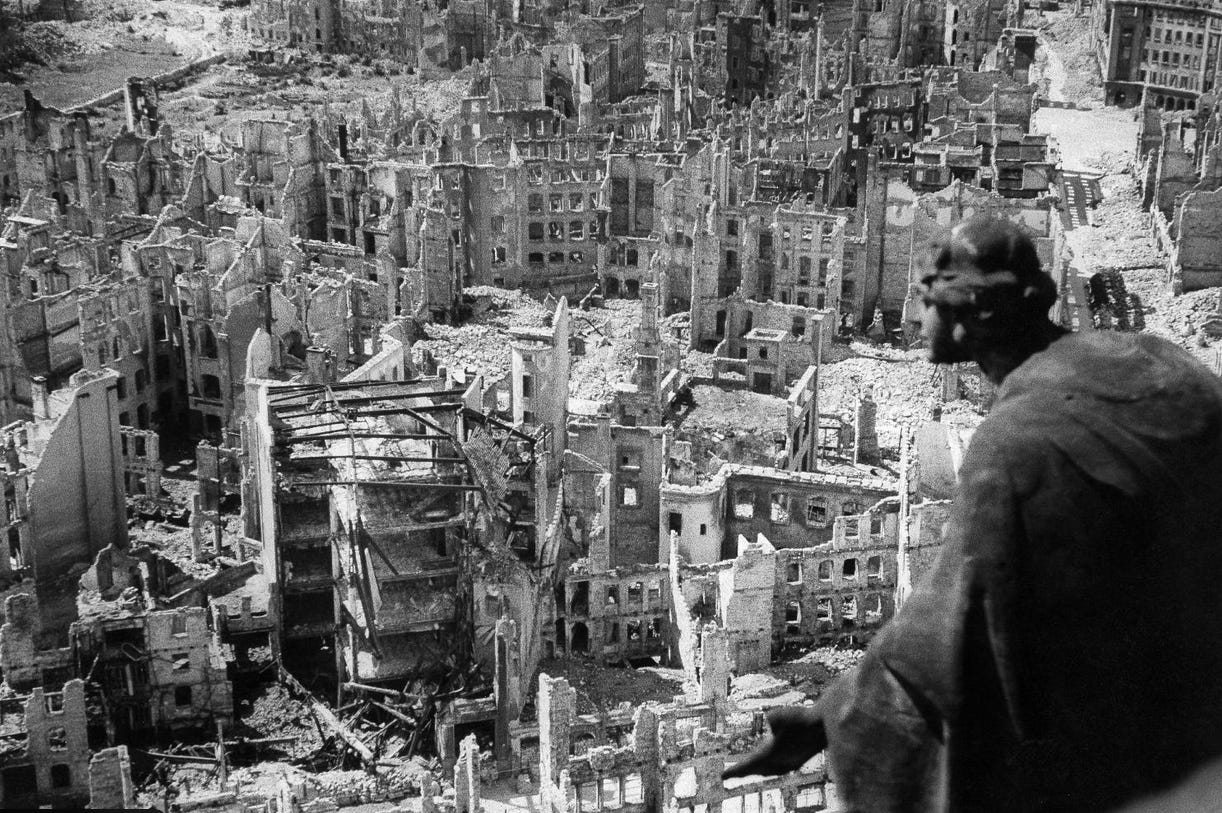
Trump’s reported statements were not isolated. AP reports that he threatened to destroy all Iranian power plants and bridges unless Iran reopened the Strait of Hormuz, and Reuters reports that he then escalated further, saying that “a whole civilization will die tonight” if Iran did not comply by his deadline. The significance of that pattern is legal as well as rhetorical. These were not public statements framed around identified military objectives or concrete claims that a specific bridge, railway, or power facility was being used for military action and would therefore be struck. They were framed as conditional coercion: meet a political demand or face destruction of the infrastructure on which civilian society depends. That is precisely why the threat raises a serious question under the law prohibiting attacks on civilian objects and threats of violence aimed at terrorizing civilians
That distinction is the beginning of the legal analysis. The law of armed conflict does not prohibit all destruction in war. It prohibits the targeting of civilians and civilian objects as such, and it requires attacks to be limited to military objectives. Article 52 of Additional Protocol I states that civilian objects shall not be the object of attack and defines military objectives by reference to their effective contribution to military action and the definite military advantage anticipated from attacking them. Article 51 separately prohibits acts or threats of violence whose primary purpose is to spread terror among the civilian population. The Rome Statute likewise treats intentionally directing attacks against civilian objects, where they are not military objectives, as a war crime.
The central legal point is therefore straightforward. A bridge, railway, or power facility is not automatically immune from attack in every circumstance. A bridge carrying troops, a railway used for military logistics, or a power facility directly supporting military operations can, in some circumstances, become a lawful military objective. But that is not the same thing as threatening the destruction of civilian infrastructure in order to compel a state to reopen a strait. The legal standard is target-specific and necessity-based. The reported threat was broad, conditional, and political. It did not reportedly say: this bridge is being used for military transport and will be struck for that reason. It reportedly said, in substance: reopen the strait or your country’s infrastructure will be destroyed and your civilization will die tonight. That is a different category of statement.
Why is it different? Because the object of the threat appears to be political compliance through fear, not the disabling of a concrete military function. In lawful targeting analysis, the target comes first and the political consequence is incidental. Here, as reported, the political demand comes first and the threatened destruction is the means of compulsion. That reversal matters. Once the logic becomes “comply or we will destroy the material conditions of civilian life,” the threat begins to look far less like military targeting and far more like coercion through threatened harm to civilians and civilian society. That is precisely why the language of “a whole civilization” is so important. A civilization is not a military objective. It is a society.
This is also why the common defense of “dual-use infrastructure” is not enough by itself. Yes, modern infrastructure is often dual-use. But the existence of some possible military use somewhere in a system does not legalize a generalized threat against all power plants, bridges, or transport links. International humanitarian law does not permit a state to move from “some infrastructure may in some cases support military action” to “we may threaten nationwide infrastructural destruction to force policy change.” The law requires a determination that the specific object attacked is a military objective, and it still requires proportionality and precautions even then. AP’s reporting reflects this point by quoting legal experts and the U.N. position that even where infrastructure may qualify as a military objective, attacks remain unlawful if they risk excessive civilian harm.
There is a second legal layer as well. Under the U.N. Charter, the prohibition is on the threat or use of force, not only the completed use of force. That matters because one does not have to wait for the destruction to occur before the legal problem arises. If a state publicly threatens force in a manner that would be unlawful if carried out, the threat itself may already be unlawful. The same principle appears in the laws of war with respect to threats of violence aimed at terrorizing civilians. In other words, the law is not limited to counting bodies after the fact. It also addresses the use of fear, intimidation, and threatened devastation as instruments of policy.
That is where the phrase “civilian terror as state policy” becomes analytically useful. The point is not rhetorical outrage. The point is that the reported threat was directed at the conditions of civilian existence: power, transport, infrastructure, and society at large. The statement was not, as reported, “we will neutralize a military installation.” It was “a whole civilization will die tonight” unless a strategic demand was met. That is the language of terror and compulsion at the level of civilian society. Even before one reaches the question of a completed war crime, there is a serious argument that this constitutes an unlawful threat of force and a threat of violence whose evident purpose is to induce fear and submission in a civilian population.
The significance of this goes beyond one statement. A state can erode law by what it normalizes in language before it erodes law by what it does in action. Once a president begins speaking as though civilian suffering is a legitimate lever of policy, the boundary between military force and terror against society begins to collapse in public view. That is not merely a tonal problem. It is a structural one. The distinction between military objectives and civilian life is one of the core restraints that keeps war from becoming open-ended destruction. When that distinction is discarded rhetorically, the legal and moral deterioration precedes the physical one. This is part of the same broader pattern explored in Gaza: Deliberate Destruction, Then Administration, where destruction and control appear not as separate phases but as part of one coherent sequence.
It also explains why the treason frame is not the strongest one. Treason in American constitutional law is deliberately narrow. It concerns levying war against the United States or adhering to its enemies, not the unlawful use of American force against another population. The stronger legal analysis here lies elsewhere: the threat of unlawful force, the threatened targeting of civilian infrastructure, the possible terrorization of civilians, and the possible movement toward war-crime liability if such threats are carried out against civilian objects as such. That broader persistence of conflict beyond stated public aims is part of the pattern examined in The War Machine: Strategic Intent and the Persistence of Conflict.
There is also a constitutional question, though it is distinct from the law-of-war analysis. A president who repeatedly speaks in civilizational terms about destruction, who threatens civilian-dependent infrastructure as leverage, and who reportedly expresses indifference to war-crime concerns raises an obvious question of judgment and fitness. That is not a medical diagnosis. It is a constitutional observation about the qualities required for office. Public power requires discernment, restraint, and the ability to distinguish between lawful force and threatened terror against a society. When the language repeatedly collapses those categories, concern about fitness is no longer based on one outburst. It is based on a pattern of conduct.
The conclusion is therefore more precise than a general claim that Trump used reckless language. If the reporting is accurate, he did not merely threaten military retaliation. He threatened destruction at the level of a civilization unless a political demand was met. He reportedly paired that ultimatum with threats against power plants and bridges, which are paradigmatic civilian-dependent infrastructure. That is why the legal issue is serious. The law of armed conflict permits attacks on military objectives. It does not permit the collapse of civilian society to be openly threatened as leverage. And once that threat is stated in those terms, the question is no longer whether the rhetoric was excessive. The question is whether civilian terror is being spoken as policy.