

Wars are commonly described as failures — failures of diplomacy, failures of deterrence, failures of leadership. They are treated as breakdowns in an otherwise stable system.
Modern conflict is better understood as a condition within a durable structure.
The relevant question is not why individual wars occur. The structural question is whether institutional behavior, over time, exhibits directionality toward the persistence of conflict.
Strategic Intent Analysis provides the appropriate lens. Reaction is fragmented, reversible, and exploratory. Strategy is selective, reinforcing, and increasingly costly to unwind. Where policy, economic structure, narrative framing, and institutional design repeatedly move in the same direction, intent can be inferred at the system level regardless of individual statements or declared motives.
This framework is developed in Operation Northwoods: A Completed Conspiracy, Not a Theory, where the distinction between reaction and strategy is established through documentary evidence. The significance of that case is not the event itself, but the analytical standard it restores: when multiple domains converge toward a single outcome and alternative paths are systematically foreclosed, strategic direction becomes visible without reliance on confession or attribution.
The same method can be applied to contemporary events. In Nord Stream and the Discipline of Reality, the analysis examines post-event behavior rather than the act itself, asking whether institutional responses moved to consolidate a specific outcome and prevent reversal. Strategic Intent Analysis operates in that space — not by assigning authorship, but by observing convergence, lock-in, and the disappearance of alternatives.
Viewed through that framework, the modern security architecture displays high directional coherence.
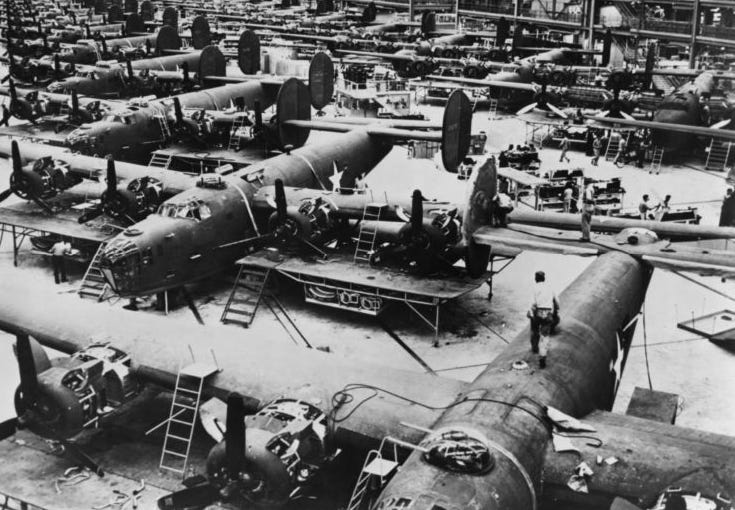
Military capability is maintained on a permanent footing. Force structure, basing, logistics, intelligence, and alliance commitments are designed for continuous readiness rather than episodic mobilization. Procurement cycles extend decades into the future. Research and development programs assume long-term expansion rather than contraction.
These choices form a standing posture rather than a temporary response.
Reversal becomes increasingly difficult over time. Personnel systems, industrial capacity, alliance obligations, and legal authorities create institutional lock-in. Each period of conflict leaves behind additional capability and authority that remains in place after hostilities decline.
Policy direction across administrations and political cycles has moved consistently toward sustained readiness rather than structural reduction. In SIA terms, the pathway shows persistence rather than reversibility.
The economic structure reinforces that direction.
Modern military power is inseparable from a large industrial ecosystem. Defense production involves specialized manufacturing, advanced materials, electronics, software, logistics, and long-cycle capital investment. These systems require continuity. Skilled labor, production lines, and supplier networks cannot be maintained indefinitely without sustained throughput.
Procurement provides that continuity. Operational use accelerates depletion, wear, and obsolescence. Replacement timelines shorten. Replenishment requirements expand. Production stabilizes around expected operational demand.
This relationship links industrial stability to sustained procurement, and procurement to the persistence of credible operational requirements.
The economic footprint of the defense sector distributes employment, investment, and revenue across multiple jurisdictions. Political representation follows that distribution. Budget contraction therefore carries concentrated local costs, while expansion distributes benefits.
Incentive alignment emerges structurally across economic and political domains.
Political risk operates asymmetrically. Failure to prepare for a threat that later materializes produces immediate accountability. Preparation for threats that do not materialize rarely produces equivalent consequence. The rational political posture is therefore precautionary expansion.
Precaution, repeated over time, produces permanence.
Narrative structure reflects the same directionality. Public communication emphasizes continuing instability, emerging adversaries, and the necessity of sustained readiness. Even as attention shifts between regions or threat actors, the underlying framework remains constant.
Acceptable strategic discussion narrows around expansion and preparedness. In SIA terms, this represents narrative canalization.
Legal and procedural developments reinforce the trajectory. Emergency authorities, contingency powers, intelligence expansions, and security classifications tend to accumulate rather than recede. Each episode increases the institutional cost of reversal.
The cumulative effect is structural convergence.
Capability expansion, industrial dependence, political incentives, narrative framing, and legal authority all move in the same direction. Alternative pathways — sustained contraction, reduced posture, or structural demobilization — become progressively less plausible.
This is the signature of high Strategic Intent Analysis: multiple domains reinforcing a single trajectory, with increasing lock-in over time.
From a natural law perspective, the relevant constraint is proportionality. Defensive force is justified to the extent necessary to protect the innocent and preserve political order. Structural analysis therefore asks a narrower question than the justification for any particular conflict.
Does the architecture remain proportionate to its protective function?
Or has system continuity become dependent upon the conditions that sustain its scale?
The answer does not require speculation about individual preferences. Strategic direction is observable in institutional behavior over time.
Periods of relative calm do not produce structural contraction. Capability remains. Procurement continues. Industrial capacity is preserved. Threat assessments expand into future scenarios. Planning intensity increases. Economic and institutional commitments deepen.
When operational demand returns, the system moves quickly. Production accelerates. Budgets expand. Political alignment strengthens. Narrative coherence increases.
Alignment is restored.
Viewed over time, conflict does not interrupt the system. It stabilizes it.
The war machine does not operate through isolated decisions. It operates through convergence.
Capability requires justification.
Industry requires throughput.
Politics rewards precaution.
Narrative sustains legitimacy.
Institutions resist contraction.
Where these forces align over decades, direction becomes visible.
Clausewitz described war as the continuation of policy by other means. In his framework, political purpose governs the use of force and constrains its scope. The danger he identified was escalation — the tendency of military means, once activated, to expand beyond their original purpose.
Modern security structures introduce a different risk. When military capacity, industrial production, institutional authority, and economic dependence become permanent features of the system, the relationship between means and policy can begin to shift. Political objectives no longer define the structure. Instead, policy adjusts to sustain it.
At that point, the question is no longer how war serves policy.
The question is whether policy is operating inside a system that presumes the continued necessity of war.
Strategic Intent Analysis does not require attribution.
It requires only observation of which paths remain open — and which, over time, disappear.
The method, subjects, and selected essay index for Strategic Intent Analysis are organized at strategicintentanalysis.com.