

Strategic analysis begins with a constraint: the objective attributed to a policy must be capable of being achieved. When an outcome is known in advance to be unrealistic, it cannot logically be the true objective of the action designed to produce it. This is not speculation but structural reasoning. If a system proceeds with a policy whose stated goal it knows cannot occur, analysis must shift from declared purpose to functional outcome.
In the current conflict with Iran, a significant fact sits at the center of the discussion. Multiple intelligence assessments in Washington concluded that even extensive military action was unlikely to collapse the Iranian regime due to the structural resilience of its political and military institutions. Authority in Tehran is distributed across clerical structures, the Islamic Revolutionary Guard Corps, and layered succession mechanisms designed specifically to ensure regime continuity. Even leadership decapitation would not dissolve the state. This assessment was widely understood within the policy community.
If regime change was judged unrealistic before the war began, then regime change cannot have been the strategic objective. The system was operating with different expectations.
Strategic Intent Analysis (SIA) approaches such situations by examining outcomes rather than declarations. The question is not what leaders say the objective is, but what outcomes the policy reliably produces. Strategy, in this framework, does not require centralized conspiracy or hidden command structures. Systems can act strategically through shared incentives, institutional preservation, and converging interests even when participants believe they are responding independently.
The first step is therefore to examine the predictable consequences of initiating a war with Iran.
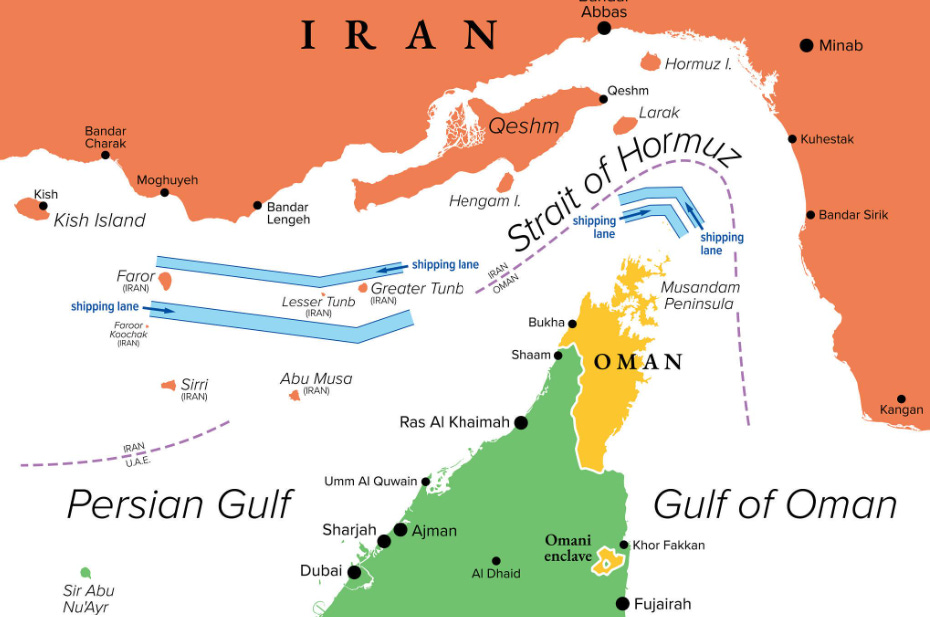
Iran occupies one of the most sensitive positions in the global energy system. The Strait of Hormuz is the primary maritime corridor through which Persian Gulf oil reaches global markets. A substantial share of the world’s petroleum supply moves through this narrow channel. Any conflict involving Iran automatically introduces risk to that corridor. Even limited hostilities generate insurance spikes, shipping hesitation, and speculative repricing in energy markets.
This makes a temporary energy price spike the most predictable immediate consequence of war. Unlike regime change, which is uncertain and historically improbable, energy market disruption occurs almost instantly once conflict threatens the Gulf’s shipping lanes or energy infrastructure.
Within an SIA framework, this distinction matters. Strategy is identified not by intention but by directional outcomes that reliably follow from the decision. The war reliably produces energy market disruption. It does not reliably produce regime change.
If the likely expectation was a temporary energy shock rather than political transformation in Tehran, then the war begins to appear less irrational. A short-term energy spike can redistribute wealth within the global system, pressure industrial economies dependent on imported fuel, and reinforce the strategic leverage of energy exporters. Energy markets often move before political explanations catch up. As explored in When Oil Moves First, shifts in energy pricing frequently signal underlying strategic pressures long before those pressures are acknowledged publicly.
This interpretation does not require coordination or hidden planning. It merely requires recognition that decision-makers were aware of the probable consequences of their actions. If the most predictable result of the policy is an energy price spike, and the stated objective is known to be unattainable, then the spike becomes the most plausible operative objective.
However, SIA does not stop with identifying likely intended outcomes. It also examines the stability of the trajectory that follows from the initial decision. A strategy that depends on tightly controlled escalation may produce outcomes far beyond those originally anticipated.
War introduces nonlinear dynamics into complex systems. Once hostilities begin, control rapidly disperses across multiple actors. Military commanders, regional proxies, financial markets, shipping companies, domestic political pressures, and allied governments all begin interacting with the conflict. Each actor responds to incentives that may diverge from the planners’ original assumptions.
This dynamic reflects a broader structural pattern examined in The War Machine: Strategic Intent and the Persistence of Conflict. Conflicts often persist not because they achieve their stated objectives, but because the systems surrounding them adapt to their continuation. Institutions reorganize around the new environment created by war, making escalation easier than reversal.
The distinction between a controlled energy shock and an uncontrolled energy crisis becomes critical at this point.
A controlled conflict produces what markets call a risk premium. Oil prices rise because traders anticipate potential disruption, but physical supply continues to move through shipping lanes. Tankers keep moving. Insurance remains available. Governments release strategic reserves if necessary. Prices stabilize at higher levels but the system remains functional.
An uncontrolled conflict produces something fundamentally different: a physical supply shock. This occurs if export terminals, refineries, or tanker routes are repeatedly attacked, or if the Strait of Hormuz becomes unsafe for sustained shipping. In that environment, the market is no longer pricing risk but scarcity. The repricing becomes much more severe because the issue is no longer uncertainty but the inability to move energy supplies at scale.
Recent developments suggest movement toward the edge of this escalation ladder. Attacks have begun targeting infrastructure rather than purely military assets. Refineries, fuel depots, and desalination plants are appearing in the target set. These are not tactical battlefield assets but systemic nodes. Desalination facilities supply drinking water for much of the Gulf. Refineries sit at the center of both national economies and military logistics. Striking such targets introduces pressures that extend far beyond the battlefield.
Infrastructure warfare alters the incentives of all participants. Civilian populations experience immediate consequences when water systems or fuel supplies are threatened. Governments face pressure to retaliate more aggressively. Each side expands its target list in response to the previous attack. The conflict begins to propagate through the system rather than remaining confined to military exchanges.
At this stage, the original assumption of a controlled energy shock becomes unstable.
Strategic planners may believe escalation can be contained. Historically, this assumption often proves fragile. Once infrastructure is targeted and retaliation cycles begin, the conflict develops feedback loops that no single actor fully controls. The result can diverge dramatically from the scenario originally modeled.
Within the SIA framework, this represents the critical risk of strategies that rely on predictable systemic effects. A temporary energy spike may have been anticipated as the most reliable outcome of the conflict. But the same structural mechanisms that generate the spike also create pathways toward far larger disruptions.
The difference between these two trajectories is stark.
In a controlled conflict, energy markets stabilize after repricing risk. Prices remain elevated but manageable. Shipping continues through the Strait of Hormuz. The global economy absorbs the shock.
In an uncontrolled conflict, the repricing shifts from risk to scarcity. Oil prices can rise dramatically because physical supply is disrupted. Insurance markets collapse for shipping routes. Tankers reroute or remain in port. Energy exporters suspend shipments if vessels cannot safely leave. What began as a geopolitical shock becomes a global economic crisis.
Strategic Intent Analysis therefore identifies two distinct layers of interpretation. The first concerns the likely expectations of the actors who initiated the policy. If regime change was never realistic, the most plausible expectation was the creation of a temporary energy price shock. The second concerns the systemic consequences of the policy once it interacts with the complex dynamics of war.
The central danger lies in the gap between these two layers.
Systems may attempt to produce controlled shocks, but complex systems rarely remain under complete control once destabilized. The same mechanisms that create the intended outcome also create pathways toward unintended ones. War, by its nature, amplifies those pathways.
Strategic analysis does not require us to assume hidden motives or secret planning. It only requires attention to structural logic. If the declared objective was unattainable, the real objective must lie in the predictable consequences of the action. If those consequences include large systemic risks, the strategy itself carries inherent instability.
The question facing the global energy system now is therefore simple, though its implications are not. Was the conflict intended to produce a temporary energy repricing that remains contained within the existing order? Or has the system already moved onto a trajectory where escalation produces a far larger disruption than planners originally anticipated?
Strategic Intent Analysis does not predict the answer. It clarifies the structure of the choice that the system now faces.